What Your Client Feels When You Have No Systems
Meet Laura.
She's the operations manager at a 30-person company. She's looking for a maintenance services provider. She found your website, liked what she saw, and sent you a message on Monday at 6:31 PM asking for information.
Now things are going to happen. And you won't be there to see them.
What Your Client Experiences From the Moment They Write
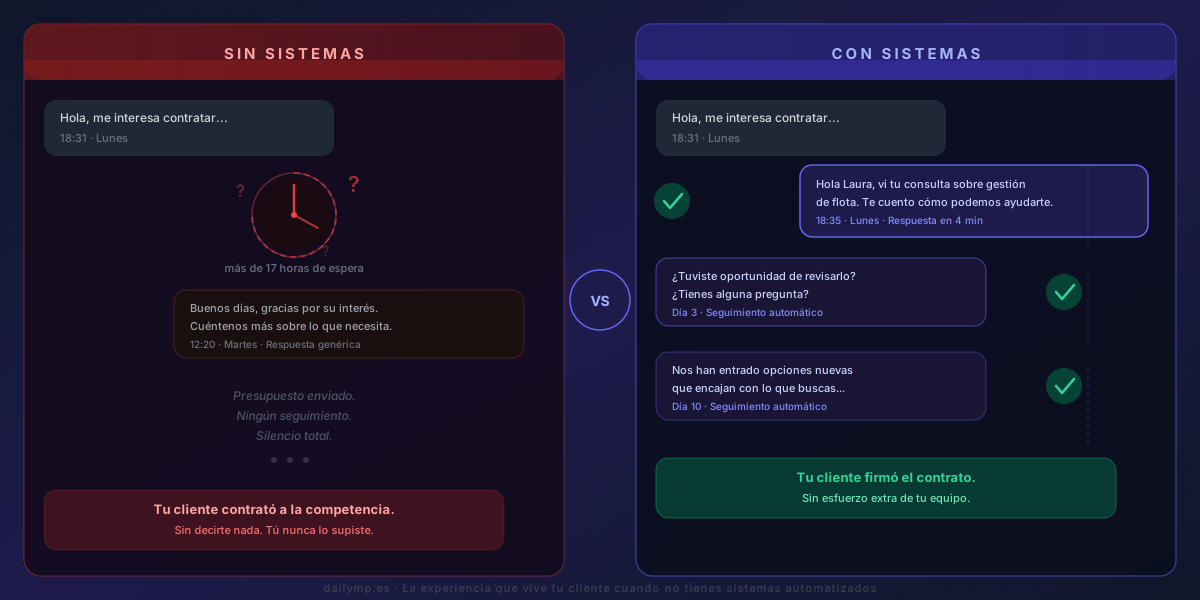
At 6:31 PM, Laura receives nothing. Not even a simple "we've received your message." Nothing.
The next morning, at 9:00 AM, your team opens their email. They see Laura's message. Someone puts it aside because there are three urgent things first.
At 12:20 PM, someone replies. A short message: "Good morning, thanks for your interest. Tell us more about what you need."
Laura already explained everything in her original message.
She repeats herself.
Two days later, the quote arrives. It doesn't reference a single detail Laura mentioned. It looks like a template sent to everyone.
Laura reviews it. She doesn't receive any message asking if she has questions. No follow-up. She never hears from you again.
A week later, Laura hired another company.
Not because they were better. But because that company responded in twelve minutes with a message that referenced exactly what she had written, followed up three days later, and Laura felt at every step that she mattered to someone.
Your Business Stops When You Stop
The problem I just described doesn't happen because your team works poorly.
It happens because there are moments when your business, simply, isn't there. When it closes at 6 PM, when the team is dealing with other urgent matters, when nobody remembers to do that follow-up that was pending since Tuesday.
And in those gaps, potential clients are making decisions.
They're comparing how your company responds versus the one next door. They're forming an opinion about your professionalism. And that opinion is built largely on things you don't see: the wait time, the tone of the first message, whether anyone remembered to ask how the project was going.
Three Signals Your Business Sends Without Realizing
You don't have to do anything wrong to lose a Laura. You just need your company to run normally, without systems to cover the gaps.
"They're Slow to Respond Here"
Every hour without a response sends an implicit message: you're not a priority.
That's not how you think of it. Your team was simply busy. But from the outside, silence speaks.
50% of buyers choose the vendor who responds first. Not the cheapest. Not the best. The fastest. If your competitor responds in twenty minutes and you take seventeen hours, you already know the outcome.
"You'll Have to Explain Yourself Again"
Laura calls to ask something about the quote. A different person answers — not the one who emailed her last week. They know nothing about her case. They ask her to explain again what she needs.
In that moment, Laura has a very concrete feeling: chaos.
She doesn't analyze it that way. But she feels it. And that feeling ends up influencing whether she signs or not.
"They Don't Seem That Interested"
You sent the quote. You waited.
Nobody asked if she had questions. Nobody wrote on day three to ask if she'd reviewed it. For Laura, that silence can only mean two things: either you're not interested in the project, or everyone's equally overwhelmed. Either way, trust drops.
And with it, the sale.
What That Same Client Feels in a Business With Systems
Laura's story in the company that has automated processes is very different.
Four minutes after submitting the form, she receives a message. It's not generic — it specifically mentions what Laura wrote, confirms someone will review her case that same afternoon, and gives her the option to schedule a direct call.
That afternoon, someone calls her with all the information already at hand. Laura doesn't have to repeat anything.
Two days later, a detailed quote arrives with the exact terms she had mentioned.
On day four, without anyone having to remember to do it, Laura receives a message: "Have you had a chance to review it? Do you have any questions before your meeting with your team?"
On day ten, another message: "Two new options have come in that fit what you're looking for. Want me to walk you through them?"
Laura never felt pressured. She just felt like she mattered to someone.
She signed the contract.
And here's what matters: nobody on your team had to remember to do any of that. It happened on its own, at the right moment, with the right message.
This Isn't Technology. It's Process.
What differentiates these two versions of the same business isn't expensive software or hiring new people.
It's having a process designed so that the client experience happens correctly, every time, without depending on someone remembering to do it.
That's exactly what we do at DAILYMP.
We analyze how a potential client enters your business. We identify the moments where the process breaks or depends on someone being available. And we design the flow so those moments happen automatically: the initial response, the follow-up, the right information at the right moment.
All through automation systems connected to the tools you already use, and with the integration that makes information flow between your channels without anyone having to move it manually.
Real Results
A consulting firm we worked with had a quote-to-contract conversion rate of 19%. Three months after implementing an automated response and follow-up system, that rate climbed to 38%.
They didn't change their pricing. They didn't change their service. They didn't hire anyone new.
They changed what the client experiences from the very first message.
Another technical services company discovered that 60% of their leads came in outside business hours. Before the system: they waited twelve to eighteen hours for a response. After: personalized response in under five minutes, and human follow-up first thing in the morning. Their conversion rate in that segment tripled in the first month.
How Does Your Business Look From the Outside?
You probably don't know exactly.
Most business owners and managers have a blind spot: they see the work they do, not the experience they create. They see the quotes they send, not the Lauras who didn't reply to the second message.
Those clients don't complain. They simply go somewhere else.
And you have no way of knowing how many there are each month.
The good news is that this can change. It doesn't require your team to work more. It doesn't require hiring anyone. It just requires designing the process so it happens correctly, every time, without depending on someone to remember.
I want to see how my business looks from the outside →
In 30 minutes, we can review together how a potential client enters your business, where opportunities are lost, and what would change if the process ran on its own. No commitment. No technology pitch. Just a conversation about how the people who aren't yet your clients see your business.