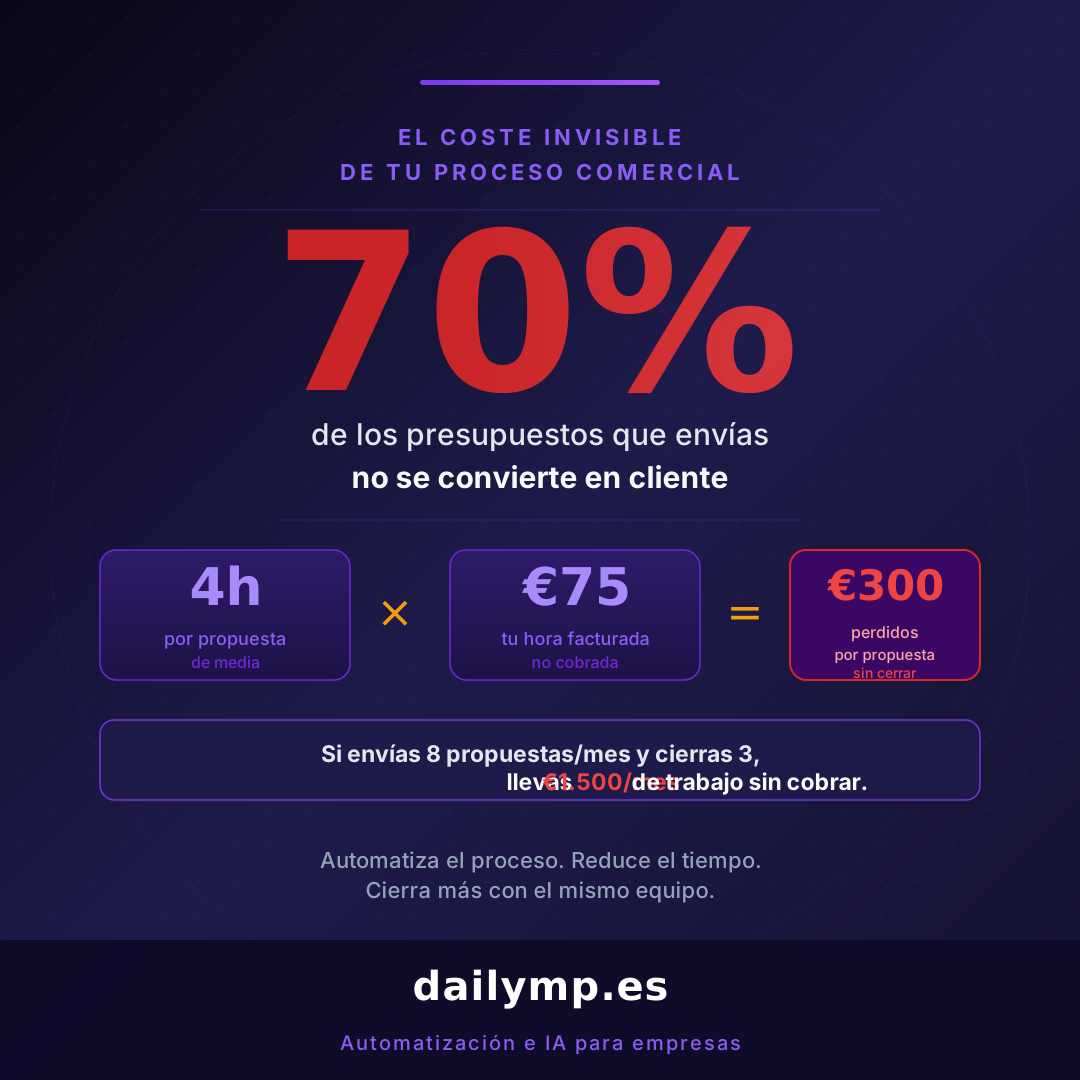
Every Quote You Don't Close Is Work You Don't Charge
This month you sent eight proposals. You closed three.
The other five took just as much effort as the ones that converted: you reviewed the project scope, estimated hours, calculated pricing, wrote the presentation, adjusted the format, and sent the email with the attached document. Between two and four hours per proposal, depending on complexity.
Those five proposals that didn't convert represent between ten and twenty hours of your time — or someone on your team's time. Hours no one is going to pay you for. Hours you can't get back.
And yet that cost doesn't show up anywhere in your accounts.
The Calculation Most Businesses Never Do
Say your working hour — or your sales person's — has a real cost to the business of €60. Not what you bill the client: what it actually costs you in time.
With that figure, a four-hour proposal that doesn't convert means €240 of unreturned work.
If your conversion rate is around 30% — which is typical in B2B services — closing three clients in a month means sending ten proposals. Seven of them don't convert: €1,680 per month in commercial work that generates no direct income.
Over a year, that's more than €20,000 of sales effort your business absorbs without it ever appearing on a profit-and-loss report.
The problem isn't that your conversion rate is low. The problem is that preparing each proposal costs too much for the volume you need to handle.
Why Manual Quoting Has a Hard Ceiling
When there's no system, every proposal starts from scratch. Even if you've done twenty similar projects, the process looks the same every time:
- Searching emails or folders for a similar past project to reference
- Trying to remember what problems that project had to price it correctly
- Recalculating hours from scratch, with the same margin of error as always
- Adapting the presentation text to the new client's sector and context
- Checking that prices are up to date and the terms still make sense
That's before counting the rounds of revision when the client asks for changes before signing.
The Friction Nobody Tracks Until They Measure It
The problem isn't the proposal itself. It's that every proposal requires someone to rebuild all the context from scratch because there's no system that holds that information.
The history of similar projects, price ranges by service type, the texts that have worked best, standard conditions and common exceptions — all of that lives in the head of whoever writes the proposal, not anywhere that works on its own.
So what could be done in forty-five minutes ends up taking four hours.
What Changes When the Process Is Automated
When a business implements a proposal automation system connected to its project history, the process shifts completely.
Instead of starting from zero, whoever prepares the proposal works from an existing foundation: the project type, the client's sector and rough scope automatically generate a starting structure with price ranges, standard conditions and reusable text blocks. The work becomes reviewing, adjusting and personalising — not building.
A proposal that used to take four hours now takes forty-five minutes.
With the same team and the same number of people, the business can handle twice as many proposals per month without increasing workload. Or it can keep the same volume of proposals and free up hours for other work.
The AI automation agents we implement at DAILYMP do exactly that: they connect your project history, your service catalogue and your standard terms to generate proposal drafts in minutes, not hours. The team only touches what genuinely needs personalisation.
The Problem Behind the Problem
There's a mistake many businesses make when analysing their sales process: they focus only on conversion rate. If they close 30%, they work on raising that number.
But there's another lever that's just as important and almost never measured: the cost of preparing each proposal. If you halve that cost, the same commercial effort generates twice as many proposals. And more proposals sent, at the same conversion rate, means more clients.
It's not magic. It's arithmetic.
If you're also wondering what happens to proposals you send and never follow up on, this article on commercial follow-up completes the picture: the cost isn't just in preparing proposals — it's also in doing nothing after you send them.
What Solving This Problem Is Worth
A business sending eight proposals per month that cuts preparation time from four hours to forty-five minutes frees up more than twenty hours per month. At a cost of €60 per hour, that's over €1,200 of recovered capacity per month — which can go toward bringing in more clients, improving ongoing projects, or simply not overworking.
And that's without counting that with more time per proposal you can do better personalisation work: proposals that are sharper, more specific to the client, and more likely to close.
The sales process is the first link in your business chain. If it starts with friction, everything that follows carries that weight.
Want to find out how much your current quoting process is actually costing you? Tell me how it works today and I'll show you what can be automated. Message me on WhatsApp and we'll work through it together.