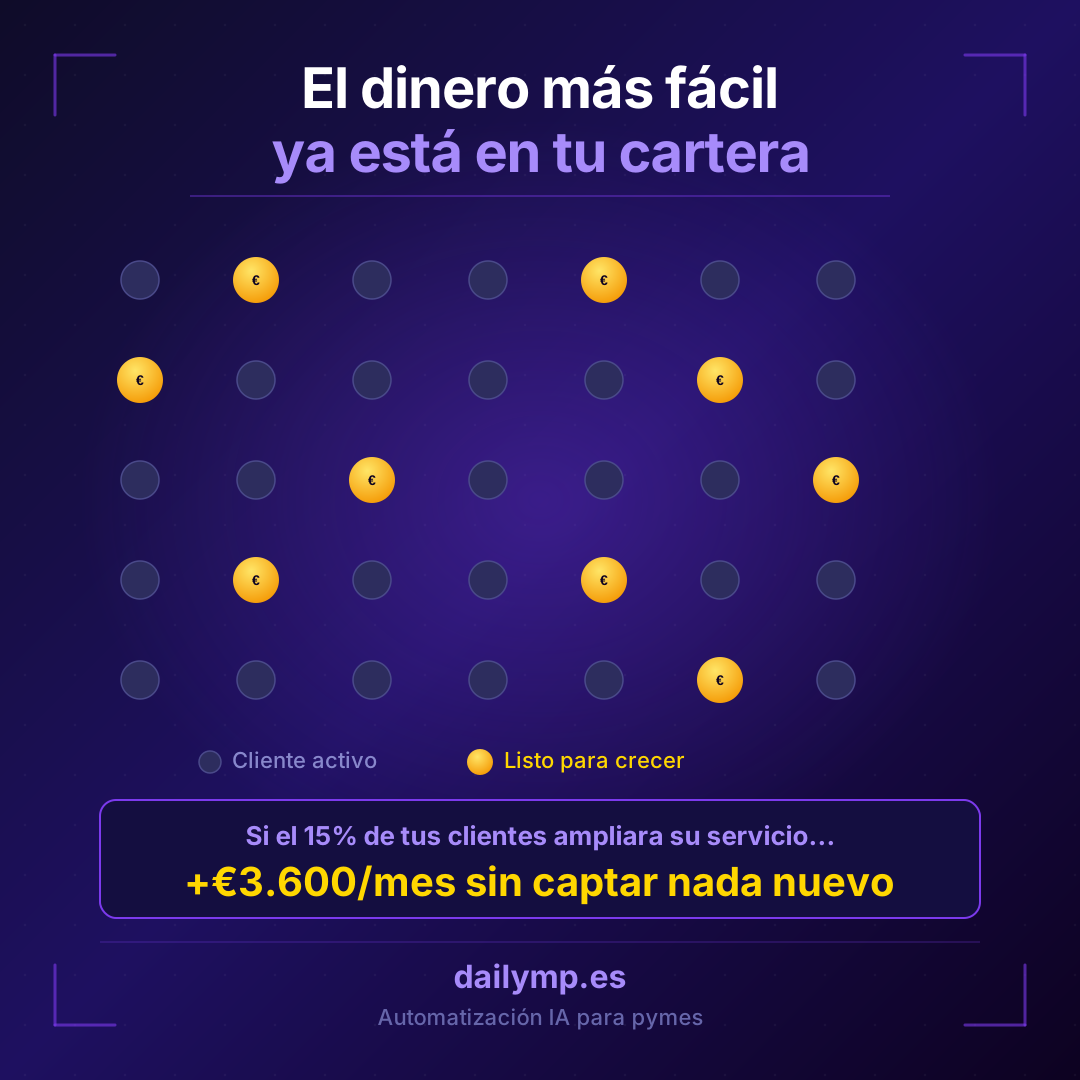
Your Easiest Revenue Is Already in Your Client Base
You have active clients right now. People who already trusted you, already paid your invoices, and already know how you work.
Some of them are ready to buy more. To move to a higher tier, expand the scope of your service, or solve their next problem with your help. But nobody has offered it. Not because they wouldn't buy it — because your business has no system to know when that moment arrives.
The mistake 80% of small businesses make
Most businesses direct 80% of their commercial effort toward acquiring new clients: advertising, networking, cold outreach, lead follow-up. The client you already have gets attention when they have a problem, and little else.
The number nobody wants to calculate: selling to someone who already bought from you costs 5 to 7 times less than acquiring a new client. The trust barrier is already gone. They know you. They've seen your work. The only missing ingredient is the right offer at the right moment.
Without a system to detect it, that moment passes without anyone acting on it.
The revenue that slips away unnoticed
Run a quick estimate with your own numbers:
- How many active clients do you have? Let's say 60.
- What percentage could expand their service or volume? In professional services, it's usually 15–25%.
- What would that expansion be worth on average? Let's say €300/month.
60 clients × 20% × €300 = €1,800/month you're not generating.
That's €21,600 per year. From clients you already have. Who already trust you. Who don't need to be convinced from scratch.
This isn't an optimistic projection. It's the direct consequence of not having a process to detect when a client is ready to grow with you.
Why it doesn't happen even though you know it should
Knowing the opportunity exists doesn't make it happen. There are three real reasons why SMEs don't work their active client base:
Nobody owns the upsell. The person delivering the service isn't focused on sales. The person focused on sales is busy with new clients. Result: nobody systematically reviews the existing base looking for growth opportunities.
There are no clear signals. You don't know when a client is ready. You could call everyone monthly, but that burns the relationship and feels pushy. Without data indicating a client is in a growth moment, you're guessing.
Timing matters more than you think. The window where a client is open to expanding the relationship is short. Right after a project delivered well. When they've just hired new people. When they've just hit a problem they couldn't solve on their own. If you don't act in that moment, it closes.
What changes when you have a system that detects signals
An agent connected to your CRM and business tools can continuously monitor client signals:
- Activity changes: a client who always replied within hours is now taking days → something changed in their business
- External signals: they posted on LinkedIn that they're hiring, opening a new office, or closing a funding round → they need more capacity
- Internal patterns: their consumption or volume has grown 30% in 90 days → they're hitting the limit of what they've contracted
- Loose comments: in the last meeting they mentioned in passing a problem that's still unresolved → there's an open opportunity
When a signal triggers, the system doesn't send an automated email. That destroys the relationship. What it does is create an alert for the right person with the necessary context: "Client X just hired three people. With their current plan, they'll hit the limit in a few weeks. Good moment for a call."
You make the call with data. The client feels understood, not sold to.
How we implement this at DAILYMP
This is part of the AI agent automation system for SMEs we build connected to what you already use: HubSpot, Pipedrive, Notion, spreadsheets — whatever you have.
The implementation process:
- Audit: we map what client data you have and what signals are already available in your tools
- Define triggers: what events indicate a client is ready for a conversation?
- Connect the system: pull data from your CRM, external sources, email patterns, meeting notes
- Configure the alert flow: who gets the notification, with what context, at what frequency
- Review at 30 days: adjust triggers based on real conversions
Most implementations take 2 to 3 weeks. The first upsell conversation with proper context typically happens within the first month.
Real results
Businesses that implement an opportunity detection system for their existing client base see two clear results within the first quarter:
They grow revenue without increasing acquisition spend. Upsell conversions have near-zero acquisition cost because the client already exists.
They improve client relationships. When someone calls because they noticed you had a need before you voiced it, the perception of that supplier changes. They stop being a vendor and start being a partner.
This also connects with AI integration into your current systems: you don't need to change the tools you use. The agent connects to what you already have and starts reading signals from day one.
A question to end with
When was the last time you reviewed your active client list asking "who here is ready to take a next step with me"?
If the answer is "a while ago" or "never systematically," that's the revenue leaving every month without anyone seeing it.