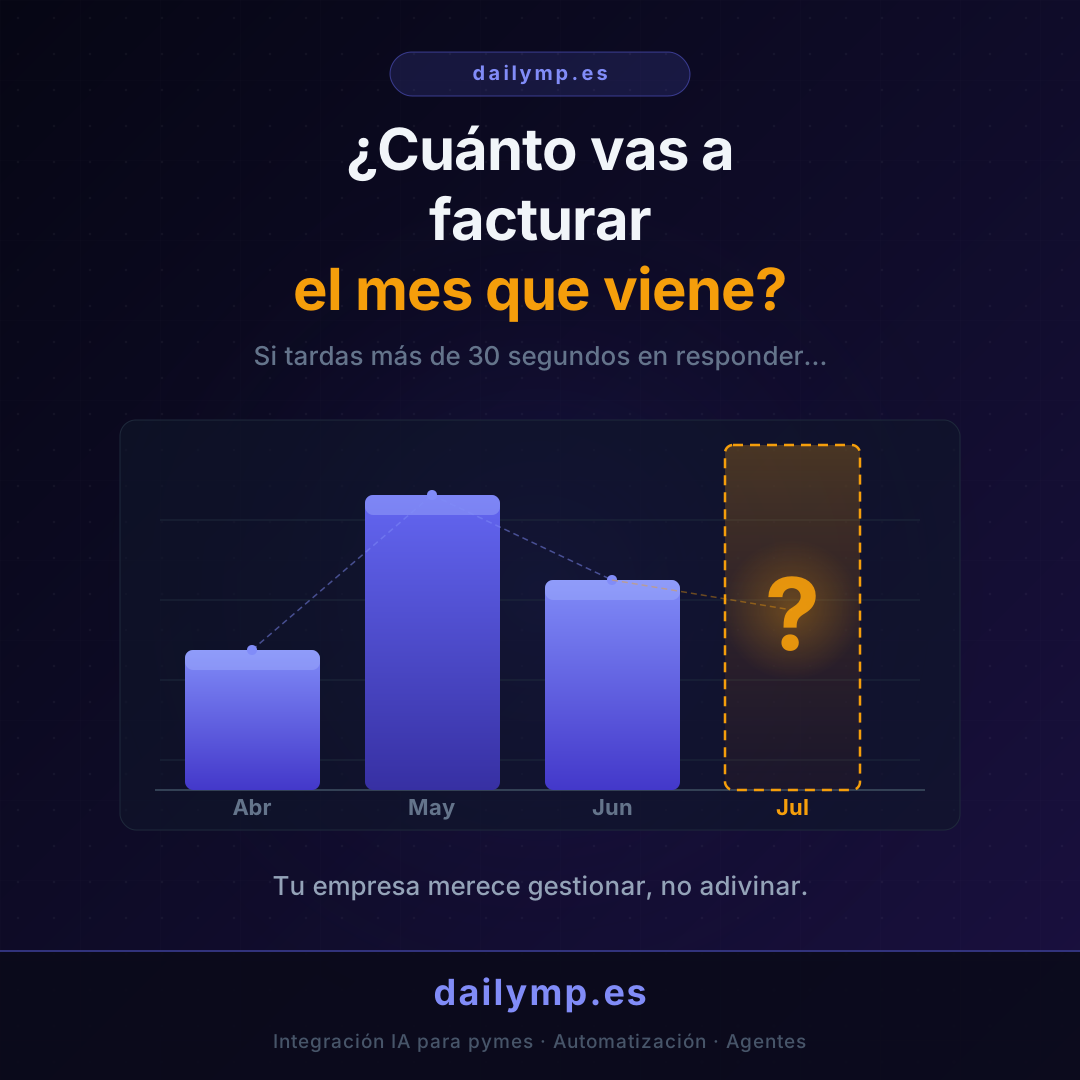
Your Business Starts Each Month Not Knowing Revenue
How much revenue will your business bring in next month? If you need more than thirty seconds to answer, you have a problem that costs you money every month — even if nobody calls it that.
Revenue forecasting isn't something reserved for large companies with finance departments. It's the difference between managing and guessing. And most small businesses have been guessing for years.
The Month That Starts Without a Map
In most small businesses, the first of every month looks the same. You check the bank balance, look at outstanding invoices, mentally calculate whether things look "roughly okay." Then you kick off the month with that vague feeling it should go well — without really knowing why.
That "should go well" isn't management. It's a bet.
And bets have a cost. Sometimes you delay a necessary investment because you're unsure about cash flow. Sometimes you don't hire someone even though you need them. Sometimes a slow month starts and you only find out when it's already too late to do anything.
What Not Knowing the Forecast Actually Costs
Let's do the calculation that almost nobody does.
If you notice weak revenue in week one of the month, it's already too late. Sales cycles for small businesses run two to four weeks. If you don't know the month is going to be lean until you're halfway through it, there's no room to compensate.
The client you could have closed sooner. If in week four of the previous month you'd known the next would be slow, you'd have followed up on unanswered proposals, moved stalled conversations forward, pushed deals that were sitting idle. You didn't — because you didn't know you needed to.
The investment you've been postponing for months. Hiring someone, upgrading a tool, opening a new channel. You always push it back because "until I see how this month goes, I'm not committing." The result is there's never enough certainty and never any investment. Your business keeps waiting for a confidence that arrives too late.
The accumulated stress of managing without data. It's not just money. It's the mental energy consumed by not knowing. Decisions made from fear because you don't have enough information to make them from logic.
Nobody measures the cost of that stress. But it's real — and it affects everything you do.
Why Most Small Businesses Fly Blind
It's not a lack of tools. Most businesses have some invoicing system, some tracking spreadsheet, some CRM that someone set up two years ago and nobody updates regularly.
The problem isn't the tools. It's that nobody connected the dots.
Proposals in negotiation aren't linked to revenue forecasts. Recurring client renewals aren't factored in until they've already happened. Signed but not yet invoiced projects don't appear anywhere as pending income.
The financial picture for next month gets built mentally. At best, with a spreadsheet someone updates when they remember.
That's not a forecast. It's memory. And memory fails, forgets, and doesn't warn you when something goes wrong.
The Difference Between Managing and Guessing
Companies that have this sorted don't have more information than others. They have the same information, better connected.
They know at any moment how much is in the pipeline and at what stage. When signed projects will be invoiced. When existing client renewals are due. Which proposals have been sitting without a response too long and need follow-up.
With that data connected, the revenue forecast for next month isn't a guess. It's a concrete number: "next month we have Y euros committed, with a reasonable probability of reaching Z if these two projects close."
That lets you make real decisions:
- If the month looks lean: activate commercial outreach while there's still time to impact it
- If the month looks strong: commit to that investment you've been postponing
- If a renewal is at risk: talk to the client before the invoice goes out, not after
The difference between guessing and managing isn't how smart the person in charge is. It's whether the information is available or scattered.
At DAILYMP we connect your commercial and financial data so that forecast number is always current without anyone calculating it manually. You can see how it works on our AI Agents and Automation page.
Real Results
When the companies we work with start getting real visibility into their pipeline, the first thing that changes isn't revenue. It's behavior.
They start activating commercial follow-up at the right moment — before the month becomes a problem, not when there's nothing left to do. They stop postponing investment decisions that have been on hold for months. And management stress drops: not because reality is better, but because you can see it in time to act.
The gap between "seeing that a month is going to be difficult" and "having enough information to do something about it" goes from weeks to days.
You don't need a finance department. You need the data you already have to be connected somewhere that someone — or something — actually reads it.
You Can't Improve What You Can't See
If you've been managing revenue with gut feeling and a weekly bank check, you're not managing. You're reacting.
The difference is that managing gives you time to act. Reacting only gives you time to regret.
If you want to know what having that visibility would look like in your business — without building a finance team, without changing all your tools at once — let's talk.