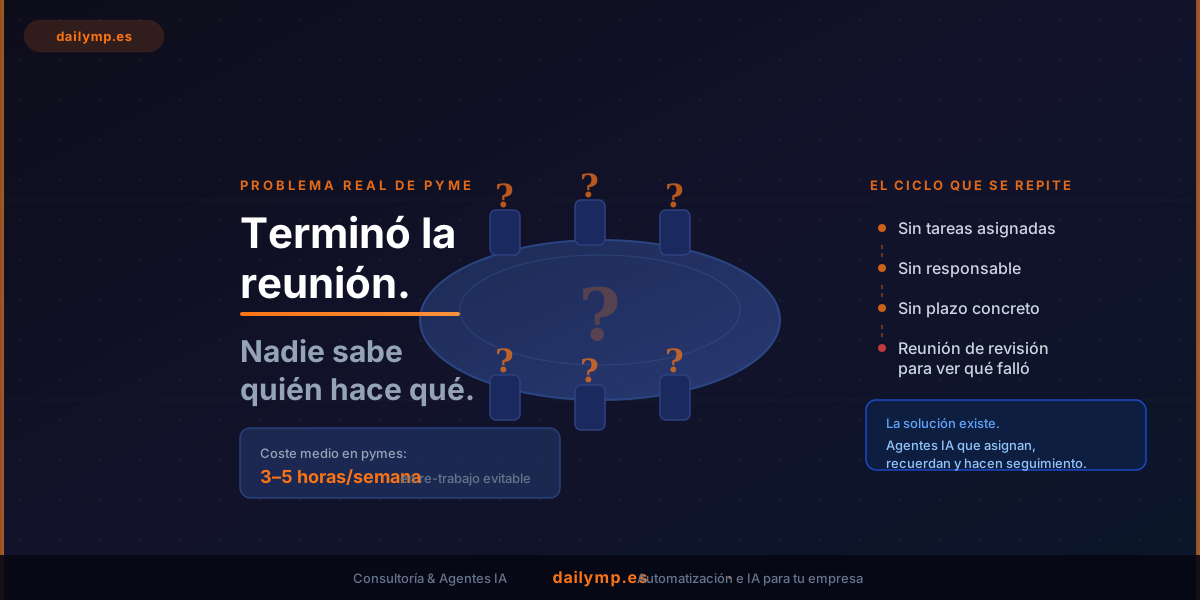
The Meeting Ended. Nobody Knows What Comes Next.
The meeting went well. Good ideas, good energy, everyone nodded along.
Three days later you ask how point four of the agenda is going. Nobody knows. Or rather: everyone has a different version of what was agreed. The deadline you had in mind was Friday. Your operations lead didn't know there was one. The external collaborator didn't even know it was on their plate.
The meeting was fine. The system failed.
The problem isn't the meeting — it's what happens after
In most businesses, meetings have a clear beginning and end. Once everyone leaves the room (or closes Zoom), the information generated starts to evaporate.
Who takes notes? Usually nobody officially. Someone jots something down in a notebook. Another person screenshots the whiteboard. A summary hits the email thread two days later, when everyone has moved on to other things.
Who assigns the tasks? Usually whoever called the meeting, later, impulsively, when they remember there were loose ends. No deadline. No success criteria. No system to follow up.
Who does the follow-up? If you're lucky, the person who called the meeting. If you're not, nobody.
The result is the same in almost every SME: decisions that disappear into a void until someone stumbles across them the hard way.
How much each untracked meeting actually costs you
Let's do the math. If your business has four people at an average salary of €2,000/month and you spend four hours a week in meetings, that's 16 labor hours per week. Around €1,600/month, just in attendance time.
Now add the invisible cost: tasks that were agreed on and never executed. The project delayed a week because a task fell through the cracks. The client who waited for an answer because a decision was made in a meeting but never reached anyone who could act. The review meeting you have to hold again because the previous one left nothing in writing.
That cost doesn't show up in any budget line. But it's there, week after week.
What happens when this accumulates
- Projects that don't move because nobody knows they're on their plate
- Clients getting contradictory answers from different members of your team
- Meetings that start with 20 minutes of "so what was left over from last week?"
- Two people doing the same work because each assumed the other had it covered
None of this is unusual. It's the default operating mode of a business without a follow-up system.
The cycle that repeats every single week
Here's what happens in most businesses without automation:
Monday: Team meeting. Good vibe. Several topics on the table. Decisions made.
Wednesday: Person A assumes Person B already started the task. Person B assumes it was for next week.
Friday: Someone asks how X is going. Nobody knows. A call has to happen to sort it out.
The following Monday: The first 20 minutes of the meeting go toward catching up on what was left from the previous one. Half the open points were never resolved.
This loop has a name: operational debt. And in businesses without a system, it compounds.
What changes when a system does the follow-up for you
You don't need to hire anyone. You need a system that does what a good assistant would do at the end of every meeting: summarize the decisions, assign tasks with an owner and a deadline, and send a reminder when the due date is approaching.
In the AI agent and automation projects we build at DAILYMP, one of the first flows we install in mid-sized businesses is exactly this: when a meeting ends, the system generates a structured summary, creates the tasks in the tool they already use (Notion, Asana, ClickUp, or whatever's in place), and sends automated reminders before deadlines expire.
No need to change how you work. It adds a layer on top of what already exists.
The result: businesses that implement this recover between 3 and 5 hours per week of team time. Not on complex work — on follow-up, information retrieval, and review meetings that used to be unavoidable.
If you want to see how it fits your business, check out the AI process integration page, where we explain how we connect existing systems without breaking what already works.
What a real case looks like
A service company we worked with had four fixed weekly meetings. None of them ended with officially assigned tasks. They managed follow-up in Notion manually, when someone remembered.
Three weeks after automating the post-meeting flow: zero forgotten tasks for the entire month. The drop in review meetings was immediate — no more time spent remembering what had been said. Every person left each meeting knowing exactly what was theirs to do and when.
No magic. Just a system.
If meetings in your business also end and everything fades, reach out. In 30 minutes I can tell you whether this has a fast fix or needs a more structured project.