Your Team Has a Hidden Limit. AI Doesn't.
Your business has a limit. It's not written anywhere. But it exists.
It's the number of things your team can do at the same time.
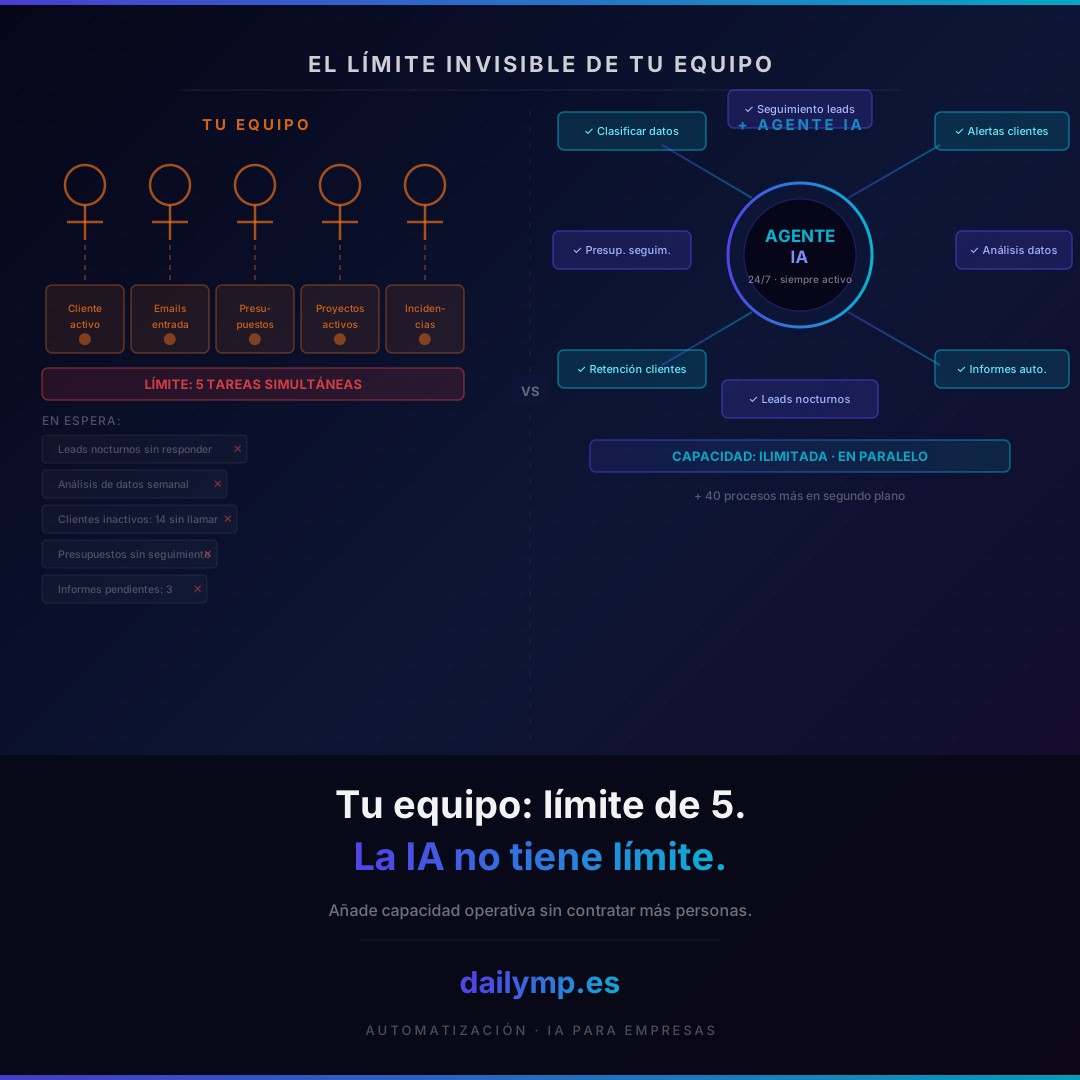
If you have five people, right now your business is doing exactly five things. Not four. Not six. Five. One per person.
This isn't a productivity problem. It's a law of physics. Humans work serially, not in parallel. And that has consequences most businesses have never calculated in actual euros or dollars.
What Fills Those Five Slots
In a five-person business, the five parallel work slots tend to be taken by the same things:
- Active client calls or meetings
- Managing incoming messages and email
- Writing proposals or quotes
- Following up on ongoing projects
- Handling today's urgent issue
Five things. All important. And while those five are happening, everything else waits.
What waits? The clients who haven't heard from you in three weeks. This week's data that nobody has analyzed. The quote sent Tuesday that got no follow-up. The leads that arrived yesterday afternoon that nobody has looked at yet.
All of that exists in your business right now. Waiting.
The Cost of That Limit, in Numbers
It's invisible. Which is why it doesn't hurt until it's too late.
Every silent client who gets no follow-up has a growing chance of going to whoever does call them. Not because you're worse — because you were busy with the other five things.
Every lead that arrives outside business hours is 6 to 10 times less likely to convert if they don't hear back within an hour. Not because the lead is bad — because your five slots were full.
Every week without analyzing your own data is a week making decisions on outdated information. Not because you don't want to improve — because analysis time competes with the five things already happening.
Here's the calculation nobody does:
- If you send 8 quotes per week and 20% don't close simply because nobody followed up, you lose 1.5 proposals per month. At a €1,500 average ticket, that's €2,250 per month disappearing without anyone noticing.
- If 30% of your leads arrive after 6pm and don't hear back until the next morning, you're converting less than half of those contacts.
- If you have 50 active clients and 10% quietly leave each quarter because nobody checks in, you lose 5 clients every 3 months.
These aren't abstract numbers. They're the three metrics we review with every business at the start of a project.
What Changes When You Add Parallel Processing
An AI agent system doesn't replace people. It adds slots.
While your five people do their five things, the system simultaneously handles everything that would otherwise go undone:
- Automatically reviews which quotes have been waiting more than 5 days and sends follow-ups.
- Detects clients with 30+ days of inactivity and triggers an alert for the right person.
- Processes leads that arrive after hours and responds within two minutes with relevant information.
- Consolidates the week's data into a report that's ready Monday at 8am — without anyone preparing it.
- Monitors incoming channels and prioritizes contacts by urgency in real time.
None of this interferes with what your team already does. It runs in parallel, in the background. It doesn't need to be activated. It doesn't wait for a free moment.
The Gap Between Five and Fifty
Your competitor with the same team size, if they've implemented these systems well, doesn't have five active slots. They have fifty.
Their five people still do the same five things yours do. But the system simultaneously handles forty-five other flows: follow-ups, alerts, analysis, responses, data classification. All in parallel. All without anyone directing it manually each time.
This gap isn't about technology. It's about operational capacity. And it grows every month you don't close it.
You don't need more people to compete. You need the right processes running in the background. You can see how we structure these projects on our AI integration for businesses page.
If you want to see exactly how many parallel slots you can add to your business with what you already have, let's talk. In 30 minutes I can tell you what's automatable, how, and what it would cost.