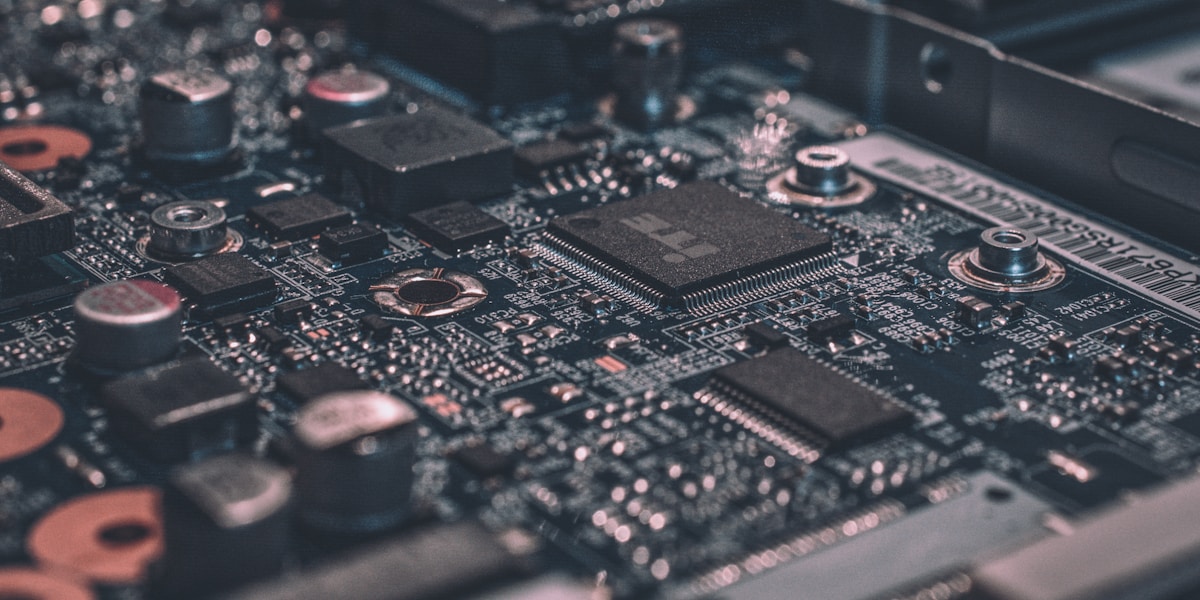
It's Sunday and My Server Isn't Resting: AI-Driven Development with Local Infrastructure
It's 11 in the morning on a Sunday. Coffee in hand, no urgencies, no meetings. While I rest, there's a machine on my local network that hasn't stopped all night: it processed three SEO audits, migrated two client databases, and completed the triage of pending tasks for the week. All without a single cloud call. Without a single euro spent on API costs.
This isn't science fiction. It's AI-Driven Development running in real production, today, in 2026.
In this article I'll explain exactly how that architecture is built, why I chose local hardware over cloud solutions, and what real competitive advantage it brings to businesses that commit to this philosophy.
The Infrastructure: Why 32 GB of RAM and 10 GbE Change the Rules
When talking about local AI, hardware is not a secondary detail. It's the pillar on which everything else rests. The choice of the Mac mini M4 with 32 GB of unified memory wasn't a whim — it was an engineering decision.
Unified memory vs. classic architectures
Apple Silicon's architecture eliminates the barrier between CPU, GPU, and Neural Engine. The 32 GB of unified RAM means the language model shares the same memory space with the rest of the system, with no bottlenecks from chip-to-chip transfers. The practical result: I can run 13B-parameter models with latencies below 200 ms on the first inference, and near-instantaneous responses on subsequent ones thanks to in-memory caching.
For a workload involving thousands of daily inferences — task triage, intent classification, audit processing — this architecture is an efficiency multiplier that general-purpose cloud servers simply can't replicate at this cost.
10 Gbps Ethernet: when heavy data stops being a problem
Bottlenecks in automation are rarely in the AI model. They're in data transfer. Moving an 8 GB database between local services over a 1 Gbps network takes minutes. At 10 Gbps, that same transfer completes in seconds.
With a 10 Gbps Ethernet connection, the local server processes database migrations, SEO audit exports, and multimedia asset transfers without the network ever being the limiting factor. This allows you to design completely different workflows: instead of optimizing to move less data, I can optimize to move the right data at the right time.
24/7 availability with minimal power consumption
A Mac mini M4 under moderate load consumes between 15 and 30 W. An equivalent cloud server for this workload would cost between €150 and €400 per month in dedicated resources. Local hardware pays for itself in months, not years — and after that, it works for you for free.
The Local Brain: How Llama 3.2 Orchestrates Your Workflow with Zero Latency or Cost
The heart of this architecture is a Llama 3.2 model running through Ollama directly on the Mac mini. This isn't an experiment — it's the component that handles the most real work every day.
The orchestrator's role: intelligent triage without friction
The orchestrator doesn't try to solve everything. Its function is more valuable than that: it decides which tool or agent is best suited to each incoming task — and it does so locally, with no network latency, no per-token cost.
When a task enters the system — whether launched manually, by a webhook, a cron job, or another agent — Llama 3.2 analyzes and classifies it:
// Call to local orchestrator via Ollama API
const response = await fetch("http://localhost:11434/api/generate", {
  method: "POST",
  headers: { "Content-Type": "application/json" },
  body: JSON.stringify({
    model: "llama3.2",
    prompt: `
      Analyze the following task and determine:
      1. Type: [seo_audit | db_migration | code_review | content_generation | data_analysis]
      2. Data sensitivity level: [public | internal | confidential]
      3. Recommended agent: [local | claude | specialized_tool]
      4. Priority: [high | medium | low]

      Task: "${incomingTask}"

      Respond in JSON.
    `,
    stream: false,
  }),
});
This classification happens in milliseconds. Thousands of times a day if needed. The operational cost is zero.
Overnight processing: what happens while you sleep
The most powerful flows are those that run without human supervision. A real example from a typical Sunday:
00:30 — The cron job launches the weekly SEO audit process. The orchestrator receives 47 URLs to analyze, classifies which ones contain identifiable client data, and segregates processing: public URLs are processed directly; those containing personally identifiable parameters are processed locally without leaving the network.
02:15 — A scheduled database migration enters the queue. The orchestrator detects it's a db_migration task classified as confidential. It doesn't delegate to any external service. The full migration — 8.3 GB — is processed locally and validated against the target schema.
06:00 — The first activity summary arrives. The orchestrator generates a Markdown report with all completed tasks, detected anomalies, and tasks requiring human review. When I wake up, it's waiting for me.
Quantized models: maximum performance with minimal resources
Llama 3.2 runs in Q4_K_M format (4-bit quantization). This allows the model to stay permanently loaded in memory with extended keep_alive, eliminating load time on each inference:
# Ollama configuration to keep the model in memory
OLLAMA_KEEP_ALIVE=24h ollama serve

# Model loads once and responds in <100ms on subsequent inferences
ollama run llama3.2 --keepalive 24h
The result: an always-available orchestrator with predictable response times and no dependency on external service availability.
The Cloud Myth: The Real Competitive Advantage Lies in Data Sovereignty
This is where many businesses make the wrong decision. They assume "cloud = modern" and "local = outdated." In 2026, with the models available today, that equation is completely reversed for many use cases.
The real cost of delegating your data to third parties
Think about what happens when you send your clients' data to a cloud API to process with AI. You're simultaneously taking on several risks:
Economic risk: Cloud AI API prices scale with volume. What starts as €50/month can easily become €800 or €2,000/month as workflows grow. With local infrastructure, that cost is fixed and amortizable.
Legal and regulatory risk: If you work with client data in the EU, the GDPR doesn't distinguish between "I only sent it for processing" and "I stored it." Sending personal data to servers outside the EEA for AI processing requires legal analysis, signed DPAs, and in many cases isn't viable without the explicit consent of the data subject. With local processing, this problem doesn't exist.
Dependency risk: Cloud APIs change their models, deprecate versions, alter pricing, and sometimes interrupt service. A workflow built on your own infrastructure has none of these external failure points.
Data sovereignty as a value proposition for your clients
For businesses managing their own clients' data — law firms, clinics, marketing agencies with CRM access, consultancies with NDA contracts — being able to say "all your data is processed on your infrastructure, without leaving the network" is not a technicality. It's a differentiating value proposition that closes contracts.
Data sovereignty is the argument that turns a technical conversation into a business decision. And it's an argument you can only make when you have the architecture to back it up.
The 12-month economic calculation
A real scenario for a mid-sized company processing tasks with AI:
| Item | Cloud API (estimated) | Local infrastructure |
|---|---|---|
| Processing 50,000 tasks/month | ~€320/month | €0/month |
| Storage and transfer | ~€80/month | €0/month |
| Hardware (amortized over 36 months) | — | ~€35/month |
| Maintenance and updates | — | ~€50/month |
| Annual total | ~€4,800 | ~€1,020 |
And this doesn't account for the fact that local infrastructure can be used for multiple simultaneous projects without the cost scaling.
Conclusion: The Future of Development Is Already Running on Your Local Network
The Sunday I described at the beginning of this article isn't the exception. It's the norm when your architecture is well designed.
AI-Driven Development with local infrastructure isn't a risky bet. It's the combination of affordable and accessible hardware (a Mac mini M4 costs less than three months of enterprise cloud API subscriptions), mature open-source language models (Llama 3.2 handles 80% of orchestration use cases), and a working philosophy that puts data sovereignty at the center.
Businesses that build this capability today will have, in 12 months, a significant operational and competitive advantage over those that remain fully dependent on the cloud. Not because the cloud is bad, but because technological autonomy is a strategic asset.
Want to implement this architecture in your business?
I design and implement AI-Driven Development architectures tailored to each business's specific needs: from selecting the right hardware to configuring the orchestrator, automation workflows, and integration with existing systems.
If your business manages sensitive data, wants to reduce AI costs, or wants to build a real competitive advantage in automation, let's talk.
Request a strategic consultation →
Or if you'd prefer to explore available services first, discover how AI-Driven Development can transform your technical team's workflow.