How Much Money You Lose Responding Late to Clients
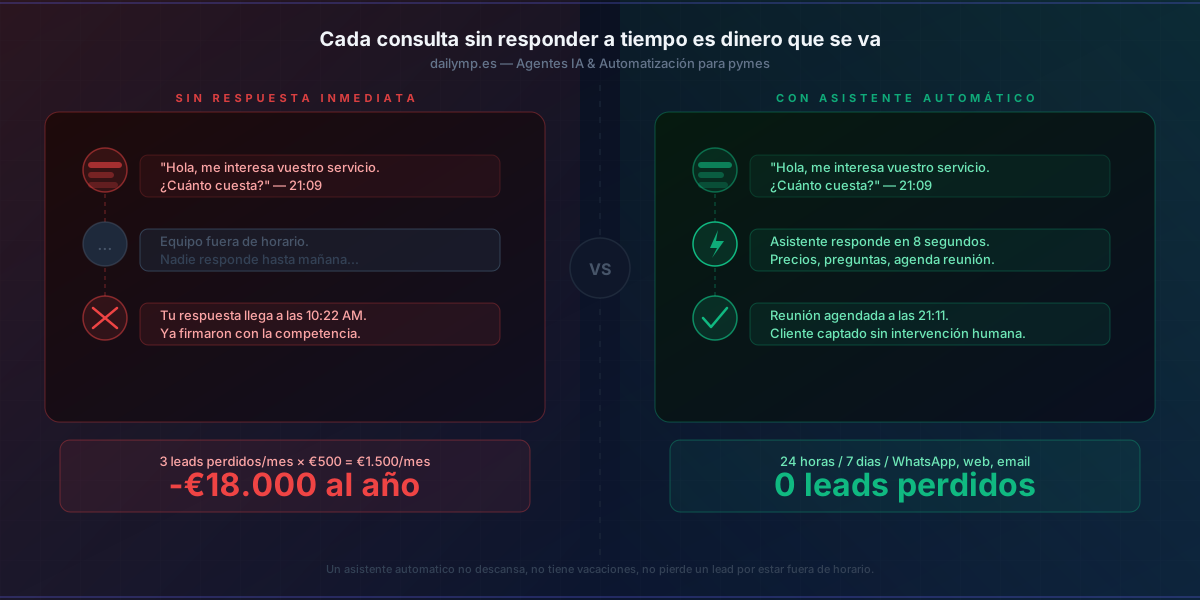
It's 9 PM on a Tuesday.
A potential client lands on your website, likes what they see, and decides to reach out on WhatsApp. They're genuinely interested. They have a budget. They want to move quickly.
They type their question. And wait.
No one responds. Not because you didn't want to. It's just that it was 9 PM and everyone had gone home.
The next morning, when you finally open your phone and reply, they've already signed with someone else. Specifically, the business that responded in 8 minutes. At 9 PM. With no one sitting in the office.
This isn't an unusual case. It happens to thousands of businesses every single day. And it has a concrete price tag that almost no one actually calculates.
The Calculation Nobody Does (But Should)
Imagine your business receives 10 new inquiries per month. That's a modest number for any SME with some online presence.
Of those 10 inquiries, if you take more than an hour to respond, statistically you lose between 30% and 40% of them. That's 3 or 4 leads that simply vanish. Not because they weren't interested. Because someone else responded first.
Now put an average value on each client you lose. If each client is worth €500 in direct revenue — and we're being conservative — the math works out like this:
3 lost leads × €500 = €1,500 per month
Per year: €18,000.
Eighteen thousand euros. Not spent on anything. Simply evaporated because the reply came too late.
What if each client is worth more? What if it's 5 leads, not 3? The number grows fast.
The most insidious thing about this loss is that it doesn't show up anywhere. It's not in your monthly close. It's not flagged in your team meeting. Those clients simply don't exist in your books — even though they should.
Why Your Team Can't Win This Battle
This isn't a people problem. It's a math problem.
Your employees have working hours. They have a backlog. When an inquiry comes in at 9 PM, or 7 AM on a Saturday, or right when someone is already juggling three things, that inquiry has to wait.
And while it waits, the client who sent it is opening Google. Looking at alternatives. Messaging another business.
A human being cannot be available 24 hours a day. They can't respond in seconds regardless of what else they're doing. They can't simultaneously handle a phone call, two emails, and four WhatsApp messages without something slipping through.
An automated system can.
And that difference, multiplied across every month of the year, is exactly what separates growing businesses from those that are always "slightly short" of clients.
What an Automated Assistant Does for Your Business
When you connect an automated assistant to your WhatsApp, website, or email, three things happen immediately:
It responds in seconds, at any hour. The client asks at 9 PM. They receive a response within 15 seconds with relevant information about what they asked. Not a generic "we received your message" — a real response with details, pricing if appropriate, or a follow-up question to understand exactly what they need.
It qualifies the client before your team ever gets involved. The assistant knows what to ask to understand whether this contact is a real opportunity: when they need it, what their budget is, what problem they're trying to solve. When your team picks up the case, they already have full context. No more "so what was it you needed again?" calls.
It never forgets to follow up. The client who reached out two weeks ago and didn't reply to your last message. The lead who said "not now, but in a month." The contact who asked for information but never made a decision. The system reaches out again at the right moment. Without anyone having to remember.
All of this without hiring anyone new. Without depending on someone being glued to their phone.
The Channels Where Most Inquiries Get Lost
Not every inquiry arrives through the same channel. And in each one, response speed carries different weight:
- WhatsApp Business: the channel with the highest expectation of fast response. A client who messages on WhatsApp expects a reply in minutes, not hours.
- Website contact form: many businesses receive the form by email and see it hours later. By then, the client has already found another option.
- Contact email: more forgiving on response time, but a lead that doesn't hear back the same day is far more likely to go cold.
- Outside business hours: Friday at 6 PM, Sunday morning, public holidays. The hours when clients have time to research and reach out — but businesses are closed.
An automated assistant covers all these channels simultaneously, without failures and without holidays. This is exactly the kind of solution we implement through our AI Agents & Automation services.
Real Results
Businesses we've worked with have gone from losing 3 to 5 leads per month due to slow response times to keeping those same inquiries alive with instant automatic responses. The system doesn't close the sale on its own — but it keeps the interest warm until your team can give it real attention.
In most cases, the difference shows up within the first few weeks: more conversations arriving with full context, fewer leads "going cold" before anyone has a chance to speak with them.
This is how AI integration for customer service processes works when done right: no jargon, no disruption to how your team works, and measurable impact from the first month.
The Question Worth €18,000
How many inquiries did you receive last month that didn't close because you were slow to respond? You don't know the exact number — no one does, because those clients simply disappear in silence.
But if there are even 3 a month, the annual cost of doing nothing is significant. And the solution doesn't require understanding technology, hiring anyone new, or changing how your team works.
It requires that when a client reaches out, someone responds. Even at 9 PM.
If you want to know how we set this up for businesses like yours — which channels we cover, how long it takes to be up and running, and what it costs — tell me what your business does.