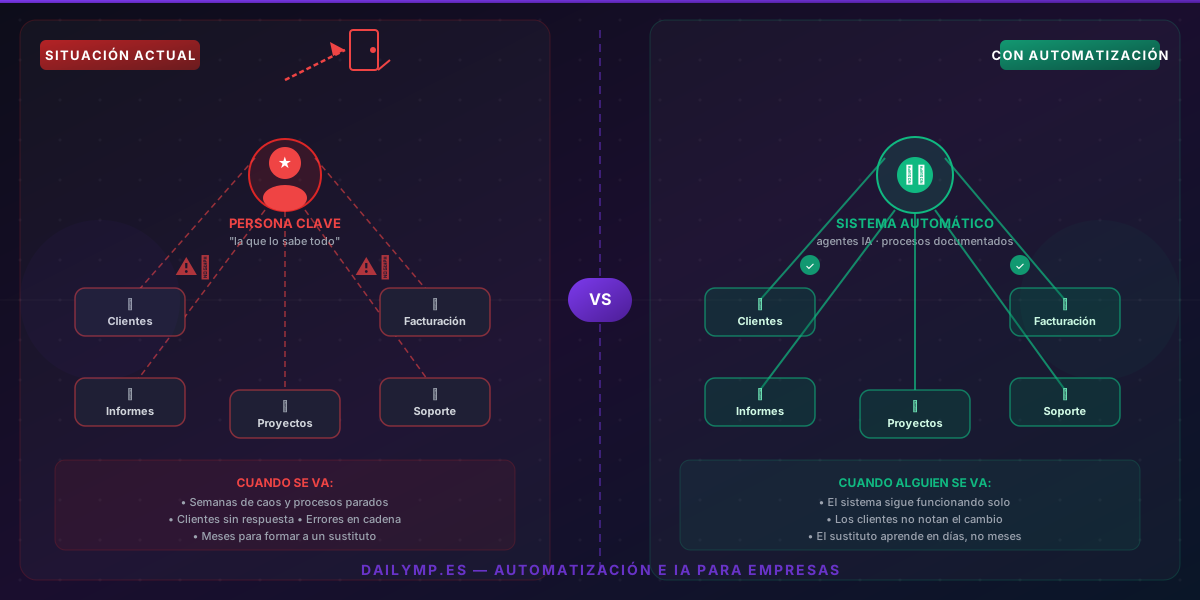
What Happens When the Person Who Knows Everything Leaves
Can you name right now the person in your company whose absence tomorrow would slow everything down — or bring it to a halt — within hours?
Most business owners can do it in under three seconds.
That's a problem. Not because that person is doing anything wrong, and not because you made a bad decision. It's the natural result of how most companies grow: through people who accumulate responsibilities until they become the centre of everything.
What almost no one stops to analyse is what it actually costs — in real money — when that person decides to leave.
The Invisible Inventory That Lives in Their Head
Think about everything that person knows that isn't written down anywhere.
They know which client prefers a call in the afternoon. They know why that one contract has a different discount. They know which supplier always runs late and how to handle them. They know where the files from last year's project are buried. They know how to format the monthly report so management actually reads it. They know why there are two versions of the same document — and which one is correct.
That knowledge isn't in the CRM. It isn't in any process manual. It isn't in a shared spreadsheet.
It's in their head. And the day they leave, it leaves with them.
It's not bad faith. It's simply how companies without systems work. The person learns by doing, accumulates context over time, and that context is never transferred anywhere — because there's always something more urgent than documenting it.
What It Actually Costs When They Leave
Let's put numbers to this. Because this isn't just an inconvenience — it's a cost you can calculate.
Weeks of immediate chaos. The first two or three weeks after a key person leaves are the worst. Clients ask questions nobody can fully answer. Processes run at half speed because the person who ran them is gone. Decisions pile up because no one feels confident making them without that person's input.
Three to six months before a replacement is fully autonomous. Hiring someone new doesn't mean plugging them in and watching them go. There are weeks of recruitment, weeks of interviews, an onboarding period, and months of learning. Throughout all of that, someone from the existing team has to spend hours training them — hours they previously spent on their own work.
The real cost in euros. A replacement process for a mid-to-senior role in an SME typically costs between €6,000 and €15,000 when you add up recruitment, training, and the productivity loss during the transition. That's before counting the mistakes made while the new person learns through trial and error.
And there's a third cost that doesn't show up on any invoice: clients who notice the change and leave. It doesn't always happen, but it happens. When the person who knew them disappears and their replacement starts from scratch, some clients decide it's a good time to look at other options.
Why This Happens in Almost Every SME
This isn't poor planning. It's the direct consequence of growing without systematising.
When a company starts, everyone does a bit of everything. Over time, certain things end up "belonging to" a specific person because they do them well and there's no time to redistribute them. That person accumulates responsibilities until — without anyone explicitly deciding it — they become the central node of a part of the business.
The problem isn't the person. The problem is that the processes they manage never became systems. They're still steps that person carries out because they know how — not because there's a documented, repeatable, automatic way to do them.
While they're there, it works. The day they leave — and everyone leaves eventually, whether for personal reasons, a career change, or a better offer — the gap is enormous.
What Changes When Processes Live in Systems, Not in People
This isn't about replacing people with machines. It's about something much more concrete: the processes that today depend on someone remembering and executing them start working on their own.
When that happens, several things change:
The replacement learns in days, not months. If the process exists as a system — with clear steps, accessible data and automation handling the routine parts — the learning curve shrinks dramatically. The new person spends their time understanding the business and building relationships, not reconstructing how everything used to work.
Clients don't notice the change. When the system manages alerts, follow-ups and records, service continuity doesn't depend on one specific person being present. The client still gets timely responses. Their data is still where it should be. Their experience doesn't change.
Knowledge moves from heads into systems. What only one person knows today becomes a process anyone on the team can follow. The business stops being held hostage to any individual's memory.
This is exactly what we build at DAILYMP with AI-powered process automation: systems that capture how your business works today and turn it into automatic processes that don't depend on any specific person being present. With AI integration into your current operations, knowledge that today lives in people starts living in systems.
We don't change everything at once. We start with the most critical processes — the ones that carry the most risk if the key person isn't there — and build from there.
Real Results
The businesses we work with at DAILYMP typically arrive with the same situation: a company that works well, but depends on specific people being there. The work isn't in the system — it's in someone's head.
What happens after automating key processes isn't just that the business becomes less vulnerable to absences and departures. It's that the team works with less friction: no one has to remember how something is done, no one has to ask the person who "knows" because the process is accessible to everyone.
The change we hear most often: "Now anyone on the team can handle what only one person could do before."
The Question Worth Asking Today
If the most critical person on your team announced they were leaving tomorrow, how long would it take to get back to normal?
If the answer is "weeks" or "months," there's work to do. Not urgent in the sense that something is broken right now — but urgent in the sense that the risk is real and the cost is calculable.
In 30 minutes we review which parts of your operation depend on specific people, which carry the most risk, and what the first concrete step would be to make those processes work independently. No commitment. No technical jargon. An honest conversation about how your business is built.