An Ordinary Wednesday: What's Draining Your Business
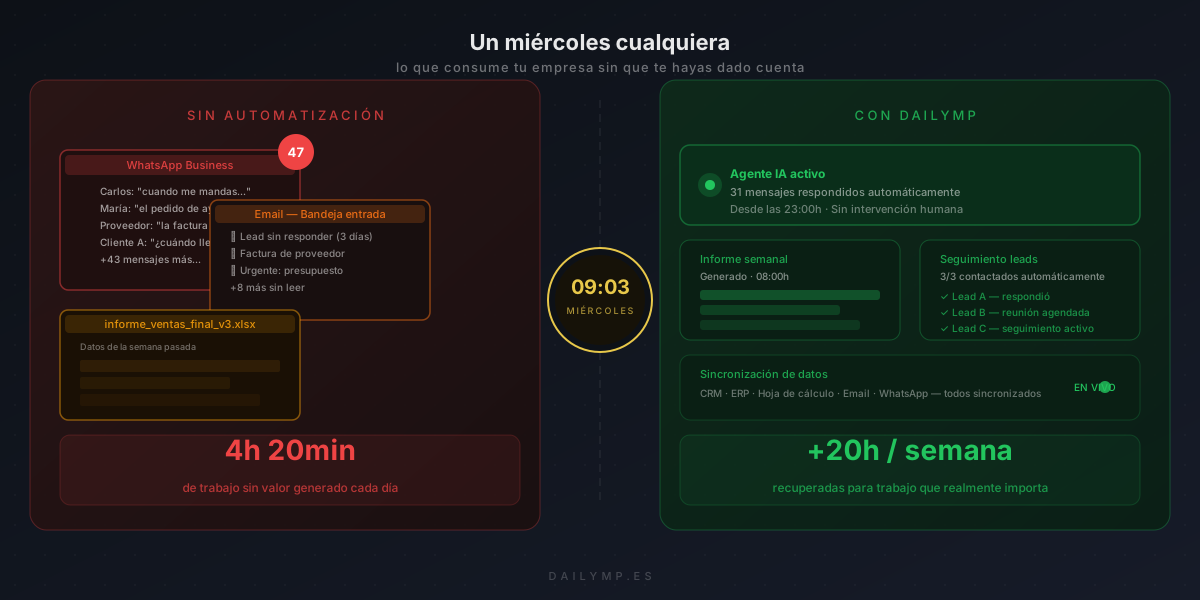
It's 9:03 on a Wednesday and you already have 47 unread WhatsApp messages.
Not an emergency. Order updates, client questions, team check-ins, that supplier asking the same thing they asked last week. Nothing critical. Everything requiring attention. And you have a meeting in 20 minutes.
This is a normal Wednesday in your business. And that's exactly the problem.
9:00 – 10:00: The Morning Chaos
Before your first coffee, you've spent twenty minutes answering messages. Not all of them — just the ones that seem most urgent. The rest you'll "get to later," which in practice means some never get answered.
Your inbox has eleven new email threads. Three are clients asking questions you answered last month, but there's no documentation of it anywhere. One is a lead who reached out three days ago and you forgot to reply.
To process one order, you need the reference number. It's in the email. No wait, it's in the spreadsheet. The spreadsheet has last week's data because nobody updated it. You call someone to ask, and they're also searching for the same information.
Time spent: 58 minutes. Value generated for the business: zero.
10:00 – 12:00: The Illusion of Productivity
That meeting was "just to catch up." It lasted 55 minutes. What got decided could have been handled in a three-line email.
After that, you prepare the weekly sales report. Open the management system, export the data, copy it into the usual spreadsheet, fix the formatting, add the charts the manager wants to see. Forty-five minutes. The same as last week. And the week before that.
At 11:30, a client calls because they "haven't heard back on their email from yesterday." You search for it. It landed in the spam folder by mistake. You respond. The client is satisfied — but they spent 24 hours thinking your company was ignoring them.
Time spent: 2 hours. Work an AI could have handled: 90%.
12:00 – 14:00: The Urgent Quote and the Forgotten Leads
An important client needs a quote "as soon as possible." You build it manually. You search for the reference prices in the rate card file — which has three different versions and you're not sure which is current. You call someone to confirm. Forty-five minutes on something that would take ten with the right information in front of you.
Meanwhile, you remember that last week there were three leads you were going to follow up with. You dig through email. Find two. The third — no idea who that was. You write to the two you found, knowing you're already seven days late. A lead that waits a week is already half cold.
At 1:45 PM, someone messages on WhatsApp asking about Client X's order status. That same answer was given by someone on your team yesterday. But since it wasn't recorded anywhere, someone has to go find it again.
Time spent: 1.5 hours. Mistakes that could have been avoided: all of the above.
14:00 – 17:00: The Afternoon That Doesn't Exist
Lunch gets interrupted twice by notifications that were "urgent" and turned out not to be.
The afternoon is spent on work that nobody sees but everyone does: updating the project tracking sheet, moving information from one tool to another, preparing the incident summary for tomorrow's meeting, answering the WhatsApp messages that piled up this morning.
Nobody decided this was someone's job. It happened because the systems don't connect and someone has to bridge the gap. Today it's you. Tomorrow it'll be someone else.
Time spent: 2.5 hours on manual transfer and admin work. Time available to grow the business: almost none.
At 6 PM, You Do the Math
You add it up. Over four hours of that Wednesday went to tasks that generated zero new value:
- Copying data between systems: 1h 10min
- Preparing reports that could be automatic: 45min
- Answering questions already answered: 40min
- Searching for information that wasn't where it should be: 55min
- Follow-ups that came too late because there's no system: 30min
In a 10-person business, that's more than 40 hours a week. More than 170 hours a month. More than 2,000 hours a year invested in not growing.
The most painful part: nobody in your company sees it as a problem. Because it's always been this way.
What If That Wednesday Were Different?
Picture the same Wednesday with AI automation:
At 9:00 AM, the AI agent responded to 31 routine WhatsApp messages overnight. Only 16 actually need your attention because they're complex cases or real decisions. The lead from three days ago got an automatic follow-up and has already replied.
By 10:00, the sales report is already in the team's inbox. It was generated automatically at 8:00 AM with up-to-date data from all your systems — no exporting, no copying.
At noon, the client who needed the quote received it at 9:30 AM. The system used the current rate card — one version, always accurate — and you only needed to review and approve.
At 2:00 PM, you have lunch without interruptions. Genuinely urgent notifications arrive labeled as urgent. Everything else waits.
At 5:00 PM, you've spent three hours doing the work only you can do: strategic decisions, important conversations, business development.
This isn't science fiction. It's what happens when your processes run themselves.
The 5 Things DAILYMP Fixes — No Technical Knowledge Required
1. Automatic client responses — WhatsApp, email, and your website answering common questions on their own, 24 hours a day, with accurate information about your business.
2. Automatic lead and quote follow-up — Nobody falls through the cracks. Every contact gets their follow-up at the right moment, without depending on someone remembering to do it.
3. Real-time reports without touching a spreadsheet — Data from all your systems consolidated automatically. This morning's report was ready when you arrived.
4. Your tools talking to each other — CRM, management system, spreadsheet, email: connected so no human has to act as the bridge. See how this works in our AI integration service.
5. An agent working when you're not — Nights, weekends, holidays. Clients still get responses. The business keeps running.
Real Results
Businesses that automate these processes with DAILYMP reclaim 15 to 25 hours per week of manual work that wasn't generating value. Hours that used to go toward copying data, preparing the same reports, and answering the same questions over and over.
What we hear a month after implementing it isn't "we're more efficient." It's: "I finally have time to think."
Not poetic. Literal. When operational work runs itself, mental space appears for what actually matters.
Next Wednesday — Is It Going to Look the Same?
If you recognized your business in any of those scenes, the question isn't whether you can automate those processes. It's how much longer you're going to keep doing them manually.
In 30 minutes I'll tell you exactly which parts of your Wednesday can be automated and how much time your team would get back.