Happy Clients Who Never Refer You to Anyone
You wrapped up the project. The client was thrilled. They said they'd definitely recommend you to people in their network — "everyone in the industry needs this." You thanked them, closed the project, and moved straight on to the next one.
That was five months ago. No Google review. No introductions. And you're still hunting for your next client the exact same way as before.
Your client wasn't lying. They genuinely meant to recommend you. But life got in the way, and without a nudge at exactly the right moment, good intentions disappear on their own.
The Sales Channel You Already Have — But Never Use
Word of mouth drives 70% of contracts in professional services. Not ads, not SEO, not trade shows. Conversations between people who already know and trust each other.
That means every satisfied client is a potential acquisition channel. They have a network full of people facing similar problems. And if you delivered results for them, they already have the best possible pitch to introduce you.
The problem is that this channel doesn't activate on its own. Your client needs a reminder at exactly the right moment — when the project is still fresh, when they're still happy, when they have the context to make a great introduction.
Without that nudge, you have dozens of satisfied clients and a massive untapped asset sitting idle.
Why You're Not Doing This Yourself
It would make perfect sense to send a check-in message a few days after closing a project, request a review two weeks later, ask for referrals a month in. In practice, it doesn't happen. Not because you don't want to — but because:
- By the time you close a project, three new urgent things are already on your plate
- You don't remember exactly when the project ended or where you left the relationship
- It feels awkward to seem pushy with someone who already paid you
- You note it somewhere and that somewhere stops existing
This isn't a motivation problem. It's a bandwidth problem. There are too many things to manage at once for a discretionary task like "ask for the review" to happen consistently.
What Should Happen After Every Project Closes
Here's what the ideal sequence looks like every time you finish a piece of work:
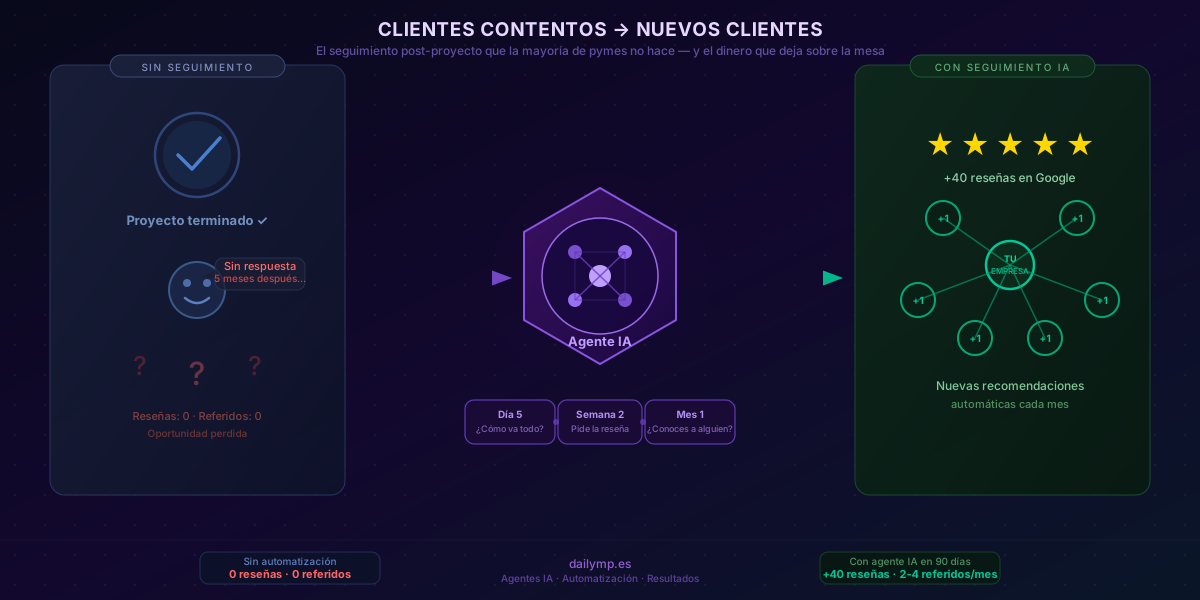
Day 5: A direct message to the client. "How's everything going since we launched? Anything come up that we should look at?" Not a cold form. A message that sounds like it came from you — because the system knows their name, the project, and what you built together.
Week 2: "If you're happy with the results, a Google review would help us reach more businesses like yours. Here's the direct link — takes two minutes." One click. Zero friction.
Month 1: "Do you know anyone in your industry who might be dealing with something similar to what we solved for you?" A direct, human question — not a corporate referral programme email.
Month 3: A relevant update or new service that makes sense given what you already know about their business. A natural reason to be back in touch.
That's exactly what a well-configured AI agent does. It remembers. It acts. At the right time. Without you supervising or remembering anything.
The Reviews You're Missing Cost More Than You Think
Businesses with more than 40 Google reviews receive, on average, 25–35% more inbound enquiries than those with fewer than 15 — not because they're better, but because social proof works as a trust filter for people who don't know you yet.
Most small businesses have 8, 12, maybe 15 reviews. Not because their clients aren't happy. Because nobody asked at the right moment.
With an automated post-project follow-up flow, in three to four months of completely normal work, it's realistic to go from 10 to 50+ Google reviews. No ads. No special campaigns. No changes to how you work.
The same logic applies to testimonials for your website, LinkedIn recommendations, and word-of-mouth referrals that bring in new clients without any marketing spend.
How This Fits Into What You Already Do
This kind of automation doesn't require starting from scratch or changing how you work. If you already have some way of tracking projects — even a spreadsheet — or you use WhatsApp with clients, or you have a basic CRM, a follow-up agent can connect to that and start working without adding anything to your day.
The agent knows when each project ended. It knows the client's name and the context of what you worked on together. It sends the message through their preferred channel — email, WhatsApp, or both. It logs whether they replied, left a review, or made an introduction.
You see the summary. No need to review individual conversations or remember anything.
If you want to understand how this fits into your broader operations, take a look at AI integration services to see how it connects with everything else.
Results From Systematic Follow-Up
Businesses that have set up an automated post-project flow have seen results like:
- Tripling Google reviews in under 90 days, starting from fewer than 15
- 2–4 new warm introductions per quarter from previous clients who would never have referred spontaneously
- Reactivated dormant clients who hadn't been in touch for months and came back when the system reached out naturally at the right moment
- Lower cost per new client, because word-of-mouth referrals arrive more qualified and with far less resistance than any paid ad
It's not magic. It's doing what a good salesperson would do — consistently, for every client, without anyone needing to manage it.
Your Business Already Has What It Takes
The hard work is already done: you have clients who trust you and what you deliver. The next step isn't investing in advertising to find new clients. It's activating what you already have.
An AI agent can do that work systematically, with genuine personalisation, and at zero cost to your attention or your team's time.
If you want to see how to build this for your type of business, we can map it out together in a 30-minute call with no commitment:
→ Tell me about your situation and we'll plan it out together