The Sales Your Business Loses Without Knowing
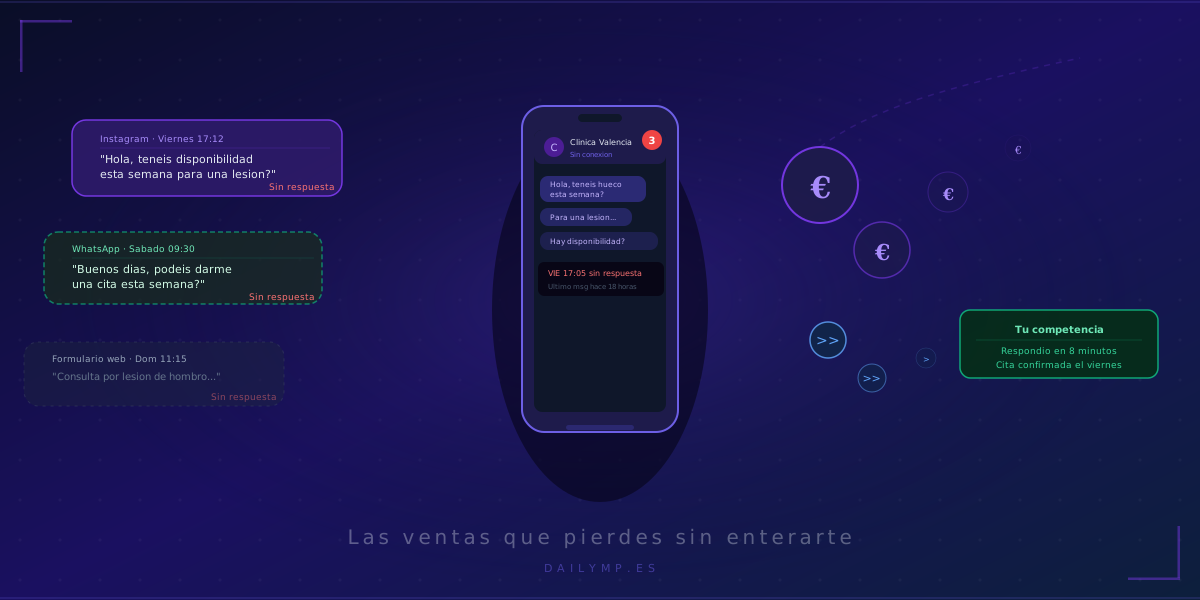
It's 5:05 PM on Friday.
Sarah, the owner of a physiotherapy clinic, has just turned off the lights and locked up. Good week. Fully booked through Wednesday.
At that exact moment, while Sarah is driving home, three different people are looking for a physiotherapist nearby.
The first fills out the contact form on her website. The second sends a message on Instagram. The third finds the WhatsApp number on Google and types: "Hi, do you have any availability this week for a shoulder injury?"
Sarah doesn't see any of these messages until Monday at 9 AM.
By then, none of the three people are still waiting.
What happens in those hours you never see
They didn't disappear. They did what anyone does when they don't hear back: they kept looking.
The first found another clinic with online booking. Booked without needing anyone to reply.
The second saw that a different clinic responded on Instagram within 15 minutes — on Friday afternoon. They went there.
The third called the first number that appeared on Google Maps. Someone answered. Appointment made.
On Monday, when Sarah opens her phone and replies: "Hi, sorry for the delay — are you still looking for an appointment?", all three already have a physiotherapist. They reply with silence, or a brief "Thanks, I've already been seen."
Most importantly: in Sarah's records, this doesn't show up as three lost sales. It shows up as three messages answered on Monday.
Does this pattern sound familiar?
It's not unique to clinics. It's the most common pattern in any service business.
An events agency gets enquiries over the weekend because clients think about their events and celebrations when they have free time — not when they're at work. If the agency only checks email Monday to Friday, they're missing conversations that start at the client's peak moment of motivation.
A renovation or construction company gets WhatsApp messages on Saturday mornings. The homeowner wanting to remodel is standing in the space that weekend, taking measurements, imagining how it could look. They write in that moment of impulse. No response — the impulse fades. By Monday the urgency has cooled, and someone else already has the job.
A law firm or accountancy gets enquiries on Sunday evenings, because that's when people finally have time to think about their problems and look for solutions. If they see the message Monday morning and reply at 11 AM, 36 hours have already passed since the client reached out.
The pattern is always the same: the potential client acts in a moment that falls outside your business hours. No fast response — they move on. You never find out.
What never appears in your data
Here's the real problem. Sales lost this way leave no trace.
Your calendar shows existing clients. Your billing system shows who paid. Whatever contact log you use shows whoever opened a real conversation.
But the people who wrote Friday evening and didn't respond by Monday don't appear anywhere as "lost sale." For your records, they never existed.
Which means when you evaluate how many new clients you're bringing in, you're only measuring the ones who survived the business-hours filter. The rest: invisible.
The question most businesses never ask: if my channels responded at any hour, how many more initial contacts would actually be coming through?
In most service SMEs I've worked with, the answer is 20–40% more potential contacts that never become real conversations.
What changes with an automatic first response
The difference isn't a machine replacing a person. The difference is no message stays unanswered while you decide whether you can handle it.
Three concrete examples of how results change:
Clinic or practice. Before: weekend messages wait until Monday. By then, 80% already have an appointment elsewhere. After: the person who writes receives within seconds a reply with available slots and a direct booking link. If they choose to book, the appointment is already in the calendar before Sarah arrives Monday morning.
Agency or consultancy. Before: form submitted Friday, reviewed Monday, replied Tuesday — client already met with another agency. After: on submission, the client receives a personalised email based on the service they described and a proposal for a 15-minute intro call with real availability. The conversation starts that same Friday.
Local trade: renovation, installers, workshops. Before: Saturday WhatsApp waits until Monday, client already called someone else. After: message receives a reply within minutes with specific questions about the project and an estimated timeline for sending a quote. The client feels they're already in process — not on an open-ended waiting list.
In all three cases, the business didn't change its team or its working hours. It changed who handles the first message.
You don't need to understand any technology for this
When most people hear "automate responses" they picture something complicated: chatbots with endless menus, code, months of setup, training for the team.
That's not what this is.
What we build at DAILYMP is a system that understands the context of what someone writes and responds with real information about your business. Not an options menu. Not "for enquiries, press 1." A response that reads like it was written by someone who actually knows your company, with the details the client needs to take the next step.
You define once how you want it to respond, what information it can share, and what should come to you. After that, it runs on its own.
If you already have WhatsApp Business, a contact form, or a business email, we can connect the system without you changing anything you currently use.
You can see how this applies to your business at AI agents and automation for SMEs and how it connects to your existing tools at AI system integration.
Real results
Businesses that move from manual to automatic first response don't just capture more leads. They also notice something they didn't expect: the profile of incoming clients shifts.
Because before, only the most patient prospects — the ones willing to wait, or motivated enough to try again — were making it through. Now you also capture the ones who would have chosen your business if you'd been there at the exact moment they asked.
How many sales are you losing right now?
You don't know. That's exactly the answer. You can't know how many contacts left because they were never logged anywhere.
What you can do is stop losing them from now on.
Tell me how contacts reach your business and I'll show you what can be automated →