Your Business Loses Days on Approvals That Take Minutes
The team hasn't been able to move forward for three days. There's no technical problem. No conflict with the client. There's a change request sitting in someone's inbox that they haven't had a moment to review.
Meanwhile, the client is asking for an update. The team doesn't know what to say. And when the manager finally opens the email, they approve in thirty seconds what had been blocked for three days.
This scenario plays out multiple times per week in most businesses with ten to fifty employees. Not because of poor management or lack of effort — but because the approval process is built on email and the availability of one specific person.
The Bottleneck That Blocks Your Business Without Anyone Noticing
Internal approvals are the kind of problem that doesn't show up in any dashboard. There's no alert that says "five projects are stalled waiting for your sign-off." No line in the report that reads "we lost eight hours this week waiting on authorizations."
What does exist is the invisible accumulation of those delays.
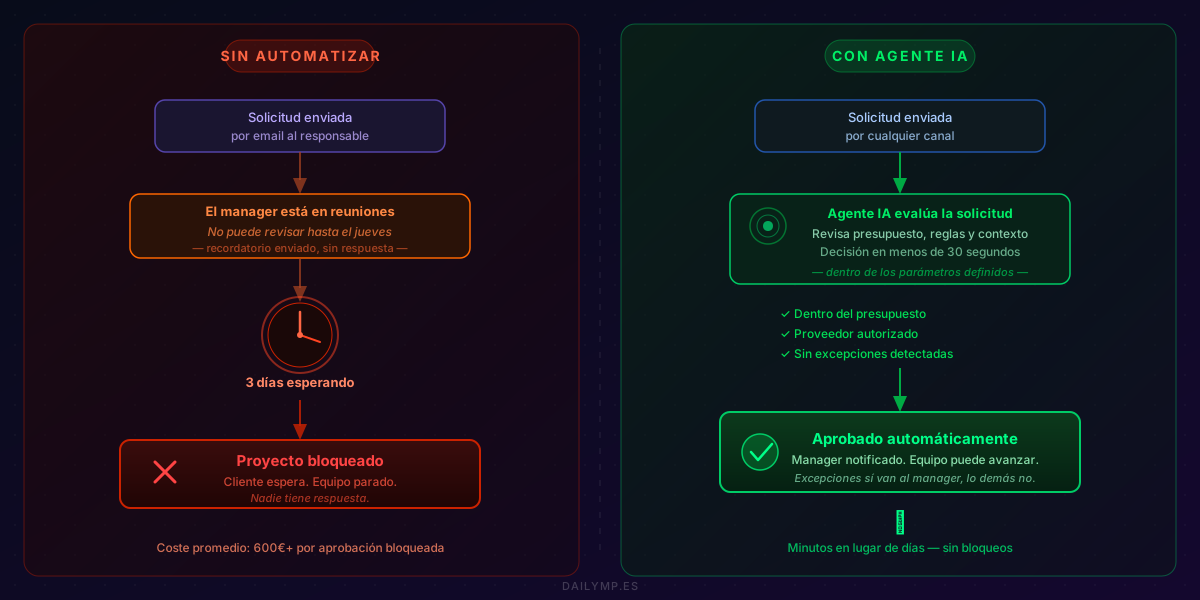
In most small and mid-sized businesses, an approval follows this flow:
- Someone needs authorization — for a purchase, a scope change, a new supplier, something to publish.
- They send an email or a message to the person in charge.
- That person sees it when they can — which is usually after a day packed with meetings.
- If they respond, the work moves forward. If not, the person waits.
- If another day passes without a reply, they send a follow-up. Which sometimes gets answered and sometimes gets lost in the noise.
- Average resolution time: two to four days for a decision that requires thirty seconds of actual thinking.
The problem isn't that managers are slow. The problem is that the system depends on one person being available at the exact moment the request arrives.
And the consequences spread further than most people realize. When someone on the team is waiting for approval, it's rarely just them sitting idle — there are usually two or three other people who can't move forward because their work depended on that step getting cleared first.
What Those Delays Actually Cost
Let's put real numbers to this.
In a company of twenty people, there are typically five to ten approval moments per week — expenses, project changes, commercial decisions, contract renewals with suppliers. If each approval takes an average of two days to resolve, and each blocked approval directly holds up two or three people waiting on it, the math is clear.
Three people at €25 per hour, idle for eight hours because of a pending approval: that's €600 per bottleneck. Multiply by the approvals that stack up over a week and you have a cost that never appears on any invoice — but is entirely real.
There's also a harder-to-measure cost that's ultimately more expensive: the slow erosion of team morale.
People who work in companies where processes constantly stall waiting for authorization start losing momentum. Not because the work is hard — but because the moments when they could actually move forward get cut short by bottlenecks they can't control. And clients, who feel the delays without understanding why they happen, lose confidence in the company even when no one has made a mistake.
Which Approvals Can Be Automated Without Losing Control
Not everything needs a human. Many approvals follow completely predictable rules.
In-budget purchases with a defined threshold. If the expense is with an approved supplier, doesn't exceed the agreed limit, and falls under the right budget category, the answer is always going to be yes. A system can verify this in seconds and approve automatically — notifying the manager so they can see it without having to act on it.
Minor scope changes. If a client requests an adjustment that doesn't exceed four hours of work and doesn't affect the delivery date, the outcome is predictable. The agent evaluates it, approves it, and notifies whoever needs to know.
Stable contract renewals. When a supplier sends the annual renewal with the same or similar terms as the previous year, there's no strategic decision to make. The process can continue on its own.
Internal content and communications. When the team produces content that follows an approved format for an existing channel, the review can happen in parallel — no one needs to wait for someone else to look at it first.
What always needs a human: situations outside normal parameters, amounts above a defined threshold, new vendors, decisions that affect client relationships. The agent flags those exceptions and routes them to the right person — with the full context already organized, so the decision can be made quickly.
The difference between both models is simple: in the manual version, everything waits for someone to be available. In the automated version, only the things that genuinely need human judgment ever reach that person.
You can see how we implement this for different business types through our AI agents and automation service.
Real-World Outcomes
Companies that automate their routine approval workflows typically see three changes they didn't expect.
The first is speed — not just in the approval time itself, which drops from days to minutes, but in the overall pace of projects. When bottlenecks disappear, the rhythm of work shifts noticeably within the first few weeks.
The second is the quality of the decisions that do reach the manager. When the system filters out routine approvals automatically, the ones that reach the person in charge are genuinely the ones that require their judgment. Less noise, more focus where it actually matters.
The third is unexpected: the team starts trusting the process. When they know a routine request will be resolved in minutes, they stop hoarding requests to send them all at once or resigning themselves to indefinite waiting.
For a broader look at which of your business processes can run without waiting on a person, see how we approach this through AI integration for businesses.
Where to Start
The first step isn't technical — it's mapping which approvals happen most often in your business and which ones always follow the same response pattern.
In most cases, 70 to 80 percent of the approvals that reach a manager have a predictable answer. They're routine. They follow rules the manager has already applied a hundred times. The only reason they pass through a person is that there's no system to evaluate them in their place.
Building that system doesn't require changing the tools your company already uses. It connects to what's already there and operates within the parameters you define. Exceptions always go to the right person — with the context already prepared so the decision is fast.
In thirty minutes I can tell you which of your approval processes is costing the most and what I'd automate first.