How an Automated Business Actually Works
It's Monday morning, 9 AM. Two businesses in the same industry, same city, roughly the same size — fifteen to twenty people each.
The first owner opens their laptop and starts putting out fires: three unanswered emails from Friday, an invoice someone should have sent on Thursday, a proposal that was never followed up on, and a spreadsheet that's already out of date before the 10 o'clock meeting.
The second owner opens their laptop and finds a summary waiting in their inbox. Everything that happened over the weekend, neatly organised: orders received, invoices sent, clients who replied and those still pending. Nothing urgent. They walk into the 10 AM meeting with the numbers already in hand.
What did that second business do differently? They didn't hire more people. They didn't change their industry. They automated the processes that didn't need a human to run them.
Monday at the Business That Still Does It Manually
There's nothing wrong with the first business. It's a normal company. Good people. They work hard.
The problem isn't the people. It's that certain tasks have been happening the same way for months — or years — and nobody has stopped to ask whether a person actually needs to be doing them.
Here's what that Monday typically looks like:
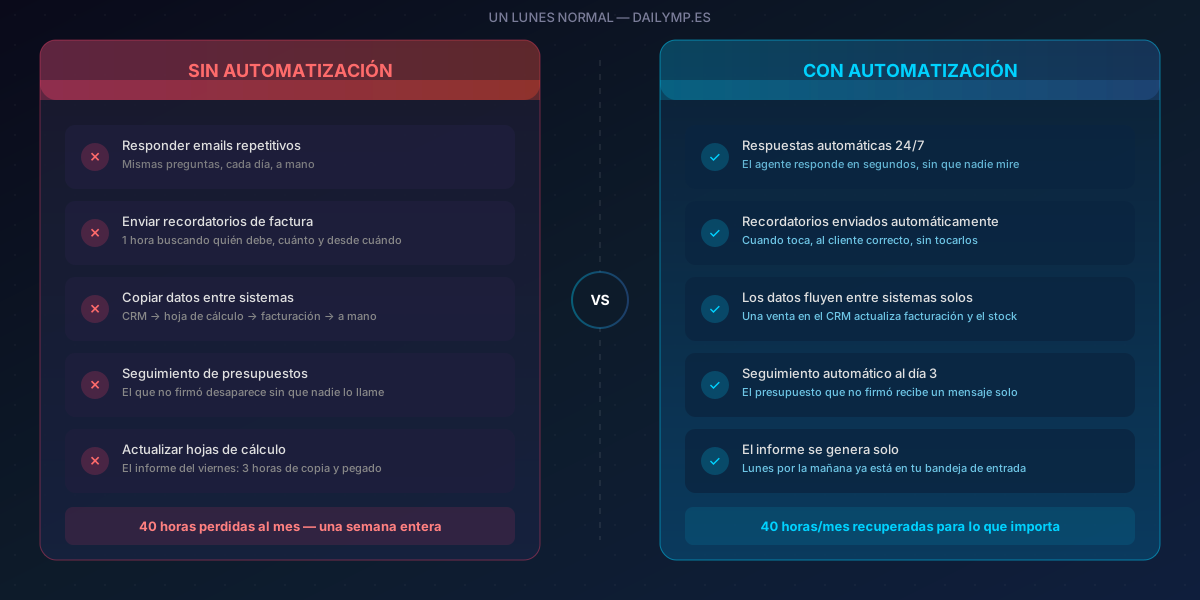
The emails that are always the same. Three or four messages from clients asking questions that have already been answered a hundred times. "What's the delivery time?" "Can you send the invoice to this address?" "How do I cancel?" Someone on the team opens each one, reads it, types a reply. One by one.
The invoice reminders. Some clients pay on time. Others pay when you remind them. Someone has to check which invoices are more than 30 days overdue, write the message, send it to the right client. An hour of the morning, gone.
Data living in separate places. The sales rep closes a deal and logs it in the CRM. Someone else has to copy it to the tracking sheet. Then to the billing system. Then to the production schedule. The same data entered three times. Three chances for something to go wrong.
The proposal that went quiet. Last week you sent three quotes. One client got back to you. The other two are still in limbo. Do you call? Do you wait? The usual answer: they sit in a drawer until the client decides — or until something more urgent takes over.
Friday's report. Every week, someone spends two to three hours opening four different systems, copying numbers, pasting them into the usual spreadsheet, recalculating totals, adding a few lines of context, and sending it over. It arrives Monday morning, right when the meeting's already started.
Add it all up — not in terms of frustration, but in real time. Easily two hours a day across the team.
The Same Monday, at the Business That Automated
The tasks don't disappear. The business has the same needs. What changes is who — or what — handles them.
Repetitive emails are answered by an agent configured to recognise those questions and respond correctly within seconds. Clients get an immediate reply at any hour, without anyone needing to be available. The team only sees the messages that genuinely need human judgment.
Invoice reminders go out automatically. The system knows when each invoice is due and who needs a nudge. The message sends when it should, with the right details, without anyone doing it manually. The team only finds out when the client responds — not before.
Data moves between systems on its own. When a new sale is logged, that information flows automatically into billing, into the production schedule, and into the weekly report. One entry, in the right place, with nothing copied manually.
The unanswered proposal gets a follow-up on day three. Without anyone remembering to do it, without it slipping through the cracks. The client receives a friendly message asking if they have any questions. Many of them reply — and end up signing — because someone (in this case, a system) took the time to check in.
The report is ready Monday at 8 AM. Nobody put it together on Friday afternoon. The data updated itself throughout the week. The manager walks into the meeting with current numbers, not figures from three days ago.
The Number That Stings
No complex analysis needed. The exercise is simple.
Pick any repetitive process in your business — just one. Work out how much time your team spends on it each week. Multiply by four.
One hour a week is four hours a month. Two hours a day across several people is forty hours a month. A full working week. Every month. Forever.
It won't show up on any invoice. That's exactly why nobody sees it. But it comes out of your account all the same — in the form of salaries paid to people doing work a system could handle.
What We Do at DAILYMP
We don't sell technology. We fix processes.
Here's what we actually do: we analyse what your team is doing that a machine could do instead. Not in the abstract — we look at your specific business, your tools, your real tasks. We identify the processes that always run the same way. We automate them. We leave them running.
You don't need to change the systems you already use. You don't need to understand how it works under the hood. You just need it to work.
We work mainly across two types of projects:
- AI Agents & Automation: systems that act on their own — responding, sending, following up, updating — without needing instructions each time.
- AI Integration: connecting the systems you already have so information flows between them automatically.
In both cases, the starting point is the same: understanding what's consuming time in your business that shouldn't be.
2026: It's No Longer a Competitive Edge. It's the Standard.
Three years ago, automating business processes was something large companies did with dedicated technical teams. In 2026, that's no longer true.
The tools exist, they're accessible, and they don't require technical knowledge to set up — as long as you have someone who knows how to do it.
Businesses in your industry that started twelve months ago aren't asking themselves whether it's worth it anymore. They're running with the same team they had before, but getting more done. Things that used to take hours now happen in minutes. And every month that passes, that gap widens a little more.
This isn't about chasing a trend. It's about stopping the losses that are already happening.
Real Results
Every business that automates its internal processes starts from a different place. But there's a pattern that keeps showing up: the first few weeks are surprising. Not because something extraordinary happens, but because suddenly nobody is chasing the same tasks as always.
That frees up time. And in a small business, time is the scarcest resource of all.
How Many Hours Is Your Business Losing Each Month?
If you're not sure of the answer, that's exactly the conversation we should be having.
In 30 minutes, with no commitment, we can walk through your business together and identify which processes could already be automated — and what that represents in real hours.
No forms. No waiting. A direct conversation about your business.