Always Fighting Fires. Never Making Decisions.
The client who cancelled on Tuesday — when did the warning signs start?
Probably a few weeks earlier. Response times slowed down. A complaint got resolved, but left a bad feeling. The project was moving forward, but without the energy of the early months. If someone had reviewed those signals in real time, something could have been done.
Nobody reviewed them. Because that information wasn't flowing anywhere automatically.
The Trap of Managing on Last Week's Data
In most small businesses, information travels like this:
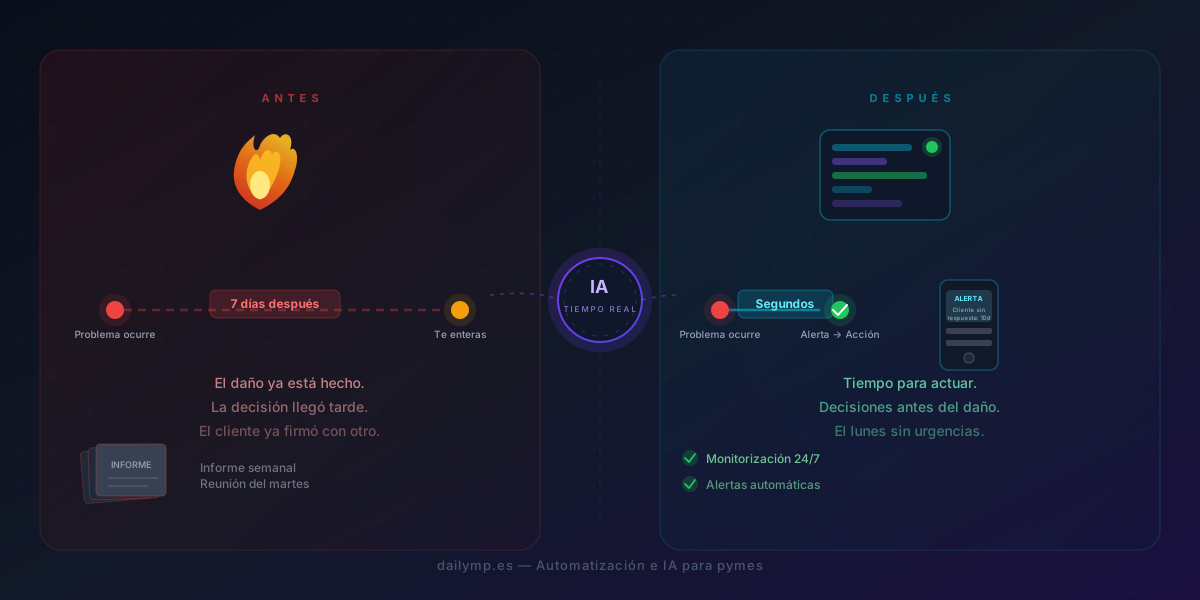
Something happens in the business → someone records it (if they remember) → the manager sees it in the weekly meeting → a decision is made → action is taken.
Between the moment something happens and the moment it reaches someone who can act, days can pass. Sometimes weeks. And when the problem finally lands on Monday's agenda, it already has history. It's already left marks. There are already consequences to manage.
This isn't a capacity problem. It's an information speed problem.
Your business isn't slow because your people are slow. It's slow because information passes through too many hands before reaching where it needs to go — and each hand represents a delay.
What Late Data Looks Like Day-to-Day
This isn't abstract. It shows up in specific situations any business owner recognises:
The monthly report that arrives on the 8th. By the time you have last month's numbers, you're already halfway through the next month. Any decision you make based on that information is already late.
The client you didn't follow up with in time. Someone on the team spoke with them twelve days ago and there was no follow-up. You didn't know because nobody flagged it. The client read the silence as disinterest.
The team that burns out before you notice. Three people in your company have been absorbing extra workload for two weeks. You'll find out at the end-of-month meeting, when the strain is already visible. By then, the solution will be harder and more expensive.
The proposal that fell through the cracks. Sent eight days ago. No follow-up happened. The client signed with a competitor yesterday — and you find out today when they try to cancel the meeting you had planned.
All of these are examples of the same problem: the information exists, but it doesn't reach the person who can act on it before it's too late.
Why Every Monday Starts with Firefighting
When data arrives late, management becomes reactive by necessity.
It's not that you don't want to get ahead of things. You can't get ahead of things with last week's information. You open your inbox on Monday and there are already three situations demanding immediate attention: a client who didn't get a response, a process that broke down, a supplier who flagged a problem that's been waiting days for resolution.
The day starts in reaction mode. And that's how it ends.
This isn't a personal organisation issue. Your business simply doesn't have systems that deliver relevant information before it becomes urgent.
The difference between managing and firefighting isn't about working more hours. It's about when you get to the information: before or after the problem already has a name and a date.
What Changes When Data Arrives in Real Time
Imagine that instead of waiting for Friday's report, you get an alert the moment a client has gone more than 10 days without activity. Not a generic automated email — a specific notification, with the client's name, the context of the last interaction, and the recommended next step.
Imagine that when a proposal hasn't been opened in 72 hours, someone on the team knows and can follow up before the client goes cold.
Imagine that when a project is running 30% over the original estimate, an alert appears before the team reaches their limit — not when they're already there.
That's what happens when processes have automatic monitoring instead of depending on someone remembering to check, update, or report.
It doesn't change the business overnight. It changes when the information arrives — and that changes everything else. Decisions come earlier. Problems are caught at the source. Monday starts with visibility instead of urgency.
This is what we build at DAILYMP through AI automation agents: systems that monitor what's happening in your business in real time and alert you when something needs attention, without anyone having to remember to check anything. If you want to understand how it connects to the systems you already use, AI integration into your current operations is the starting point.
Real Results
The companies we work with at DAILYMP describe a specific change after the first few weeks: Monday no longer starts with emergencies. It starts with a summary of what happened, what needs attention, and what can wait.
Problems don't stop existing. They stop being discovered when they already have consequences. The difference between learning about an at-risk client with a week's lead time versus learning when they've already signed elsewhere is exactly that: time to act.
The most common feedback: "Now I know what's happening in my business before someone has to tell me."
The Question Worth Asking
When was the last time you made an important decision based on data from that same day — not last week's report?
If the answer is "rarely" or "almost never," your business is managing the past. Automated systems don't change the business: they change when you receive the information. And that moment is, often, the difference between solving a problem and fighting it as a full-blown fire.
In 30 minutes we review together what information in your business arrives too late, which decisions are being made at the wrong time as a result, and what the first process to monitor would be so you can start acting sooner rather than later. No commitment. No technical jargon.