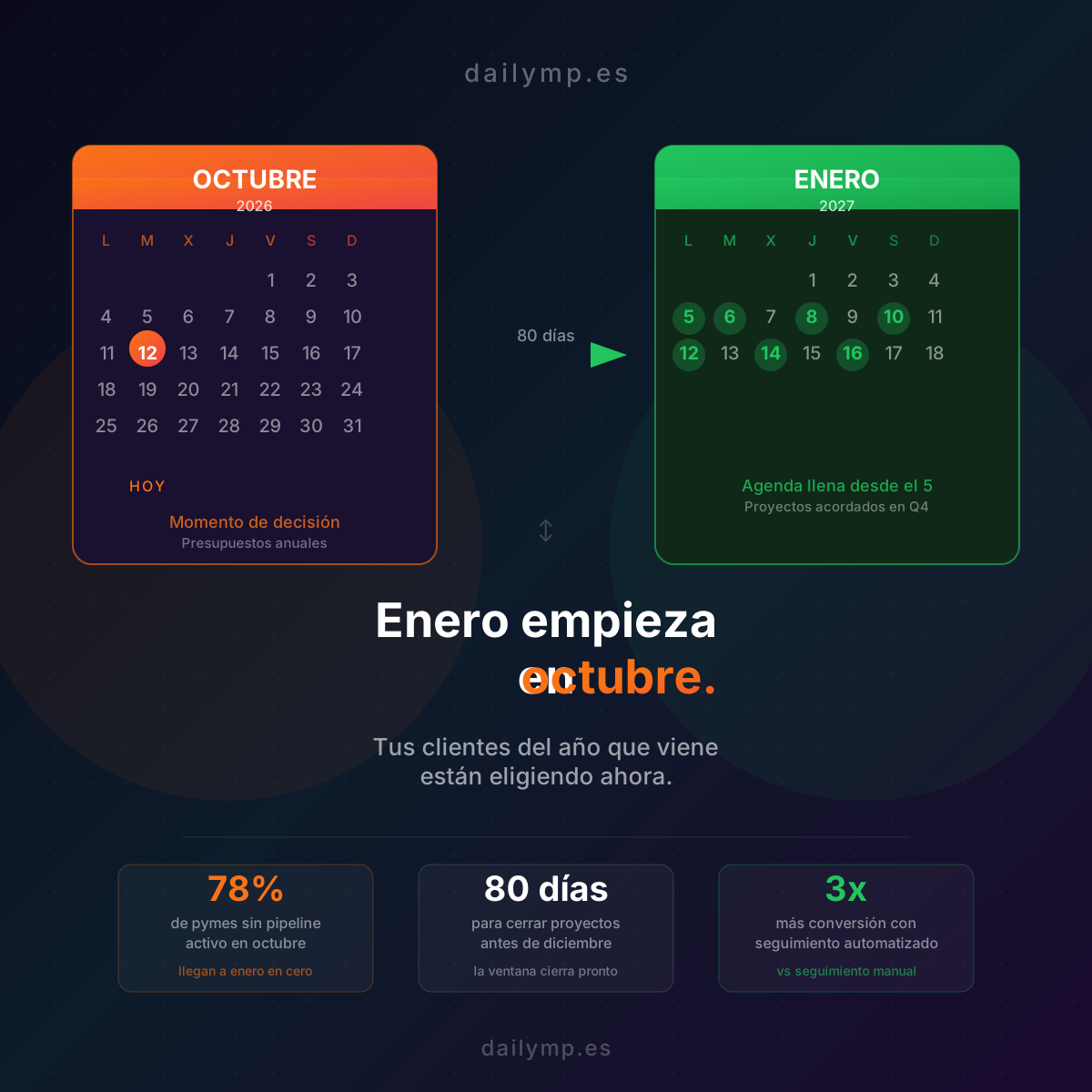
Your Slowest Month in January? You Caused It in October
There's a pattern that repeats every year in almost every service-based business.
January arrives and the phone doesn't ring. The calendar is half-empty. The proposals you sent back in September have gone quiet for weeks. And you find yourself trying to restart the year with the same energy you had in October.
The question is: why?
The answer is uncomfortable. January doesn't fill itself in January. It fills in October.
How your clients decide who they work with next year
Think about how a mid-sized company behaves when Q4 arrives.
The decision-maker — whether it's the operations manager, the director, or the business owner — starts thinking about next year. What projects do I want to run? With whom? How much budget do I need to set aside?
These conversations don't happen in January. They happen in October and November, when there's still time to plan properly. By December, the decisions are already made — they just need to be signed.
And who shows up on that shortlist of vendors for next year?
The businesses that have stayed present. The ones who sent a message in September to check in. The ones who shared something useful on LinkedIn last week. The ones who called to follow up on a project from spring. The ones who made themselves remembered, without anyone having to go looking for them.
If your business has gone months without contacting past clients or dormant leads, you are not on that shortlist.
The invisible cost of having no active outreach in Q4
When you do your year-end review, you see what you invoiced. What you don't see is what you didn't invoice — because nobody did the follow-up.
That client who hired you in March and was thrilled with the results. Nobody called them since. When they need a new project in November, they're not going to dig through old emails. They'll call the company that showed up at the right moment.
That lead who asked for a quote in July and said "we'll think about it after the summer." They never got a follow-up call. Someone else closed them.
That company that was almost ready to hire you but the timing didn't work out. In October they're deciding on vendors for next year. If there's nobody from your side keeping that relationship warm, that conversation is never going to happen.
In a business billing $150K a year with ten active clients, losing three or four renewal or upsell opportunities during Q4 can mean $20K–$40K that doesn't come in during January and February. Invisible losses. No line item on any report. Nobody even notices.
What businesses with full January calendars actually do differently
They don't have more luck. They don't have more headcount. They have a system.
That system has three things most small businesses don't:
A complete record of every client and lead, with their last contact date. Not just active clients — everyone who ever showed interest or made a purchase. With the date of the last touchpoint. When you see that someone hasn't heard from you in four months, you know it's time to act.
An automatic contact cadence. You don't have to remember who to call this week. The system does it for you. An automatic reminder when a client has been inactive for 60 days. A message that goes out near the anniversary of a project. A follow-up email sent automatically if a proposal hasn't been answered in 7 days.
Prepared messages for each situation. You don't improvise every time you need to reach out. You have templates for reactivating a dormant client, for following up on a proposal, for asking about projects planned for next year. Specific, personal messages that don't read like a mass email.
With this system running, every week in Q4 has outreach going out to people who at some point expressed interest in what you do. Without any extra effort on your part. Without having to remember.
Why most businesses don't have this system
It's not a lack of motivation. It's that in October you're buried in active projects, month-end closings, and everything that piles up in Q4.
Sales follow-up always gets pushed to when there's a gap. The gap never comes. January arrives and you wonder why the phone isn't ringing.
An AI agent connected to your CRM — or even a well-structured Google Sheet — can do this outreach on your behalf. It detects who's been inactive for weeks. It generates the right message. Sends it at the right moment. Or at minimum, alerts you so you can do it yourself.
This isn't science fiction. It's exactly what we implement in AI automation services for SMBs that have an active sales process and don't want to rely on someone remembering to follow up.
You have until late November
Year-end budget decisions close before the holiday break. For many businesses, that deadline is November 30th.
If you activate your follow-up system this week, you have roughly six weeks to close conversations, reactivate dormant clients, and put yourself on the vendor shortlist for 2027.
Wait until December and you arrive after the decisions are already made. Wait until January and you're competing with everyone else from scratch, with no warm relationship to build on.
Our AI integration service might seem like something to think about "when the business gets bigger." But automated sales follow-up is exactly what you need right now, before this window closes.
You have the product. You have the clients. What you're missing is a system that keeps them active.
Want to set it up before October is over?
Message me on WhatsApp and we'll look at it together this week.