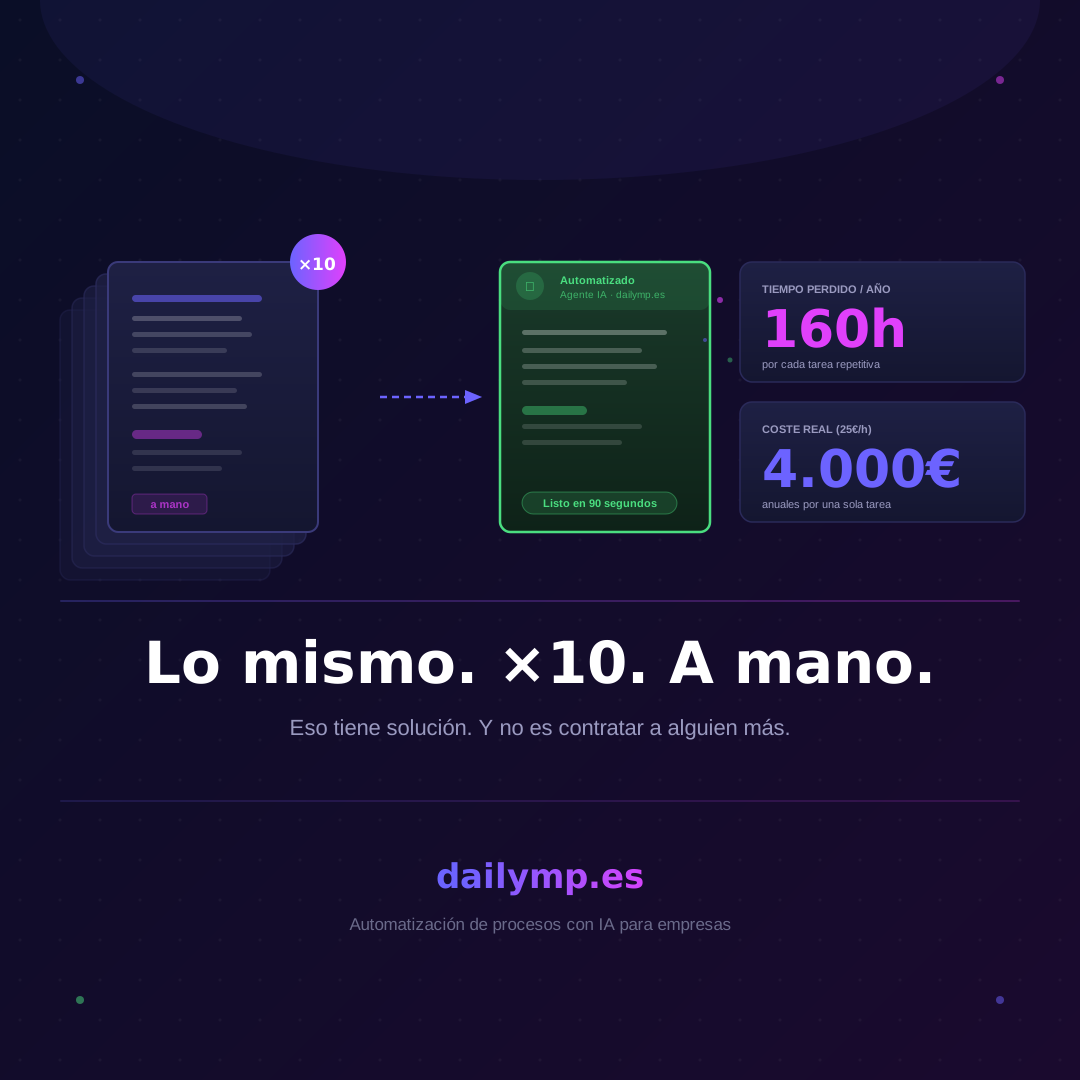
Same Task. 10 Clients. Every Week. By Hand.
Every Tuesday morning, somewhere in a service business, someone opens their laptop and does exactly the same thing they did last week.
Opens a template. Changes the client's name. Updates three numbers. Attaches the file. Sends the email. Closes the tab. Opens another one. Repeats.
Ten times.
Or fifteen. Or twenty, depending on how many clients they have.
By the time they're done, they've spent the first hour and a half of their workday on something that didn't actually require a human being. It required a system they don't have yet.
The Math Nobody Has Run in Your Business
There's a trap with repetitive tasks: because each one only takes "a few minutes," we never put them on the scale. But minutes add up.
Take a single task: the weekly status update you send each client. Say it takes 20 minutes per client. You have ten active clients.
That's 200 minutes every week. That's 160 hours a year. If the person doing it earns €25/hour, that's €4,000 a year on one task alone.
But most service businesses don't have just one of these tasks. They have three or four:
- The weekly status report
- The follow-up email after every meeting
- The quote update for each client
- The monthly payment reminder
Add them up. The result isn't "some wasted time." It's between €12,000 and €20,000 a year in work that doesn't grow your business, doesn't strengthen client relationships, and creates zero competitive advantage.
It just keeps the wheel turning.
Why You're Still Doing It This Way
The honest answer isn't carelessness or a lack of foresight. It's that nobody has shown you a realistic alternative that doesn't cost a fortune or require a full IT team.
There are also three beliefs that block this in almost every small business I work with:
"Every client is different." Yes, in the details. But 80% of each task is identical across all clients. The difference is the name, the number, the date. That's parameterizable.
"It only takes 10 minutes, it's not a big deal." Ten minutes per client, ten clients, four tasks, fifty weeks. Run the numbers.
"I don't want to lose the personal touch." Automated doesn't mean impersonal. A well-configured message arrives more consistently, more punctually, and without the errors that happen when someone is rushing through their checklist.
The Cost That Doesn't Show Up on the Invoice
Beyond money, repetitive work has another cost: the person doing it gets bored, makes more mistakes, and eventually leaves.
Your best team members didn't join your company to copy-paste reports every week. They joined to do something meaningful. When they spend a third of their workday on mechanical tasks, two things happen: quality drops and motivation drops with it.
Replacing an employee who leaves because they were fed up with repetitive work costs you three to six months of their salary. Between the hiring process, onboarding time, and the months before the new person is fully productive.
Automating that task doesn't just save money. It keeps talent.
What Changes When You Stop Doing It by Hand
The first week a task like this stops being done manually, three things happen:
The person who was doing it has real time for something else. Not another mechanical task — actual work that grows the business. Client conversations, process improvements, opportunities that are currently slipping through the cracks because nobody has time to look.
Clients receive it better. More punctual. Without the Tuesday delay when something urgent came up. Without the email that went to the wrong client because someone grabbed the wrong attachment.
You stop having to remember it. The system runs it. If something goes wrong, it tells you. Only then do you need to look.
To see how this works in practice, take a look at our AI agents and automation service. We've also documented real cases on the automation blog showing how we've resolved this for actual businesses.
How We Do It at DAILYMP
The process doesn't start with technology. It starts with a question: what exactly does this person do every time they repeat this task?
We map the task. The data it needs, where it comes from, when it triggers, what changes per client. From there we build the automation — whether that's an AI agent or a workflow — based on what makes the most sense for your business.
We test it against real cases before letting it run on its own. And when it's ready, it runs without anyone having to remember to activate it.
We don't ask you to understand AI. We ask you to tell us which task you're tired of repeating.
The Calculation I'm Asking You to Do Right Now
Before you close this tab, pick one task. Just one. The one you repeat most often for each client throughout the week.
Calculate the total time: time per client × number of clients × weeks per year.
Then multiply those hours by what the person doing it earns per hour.
What number do you get?
If it's more than you expected, there's a solution. It doesn't require hiring anyone new, it doesn't require you to understand code, and it doesn't take months to implement.
Message me on WhatsApp and tell me which task it is. In 20 minutes I'll tell you whether it makes sense to automate it.