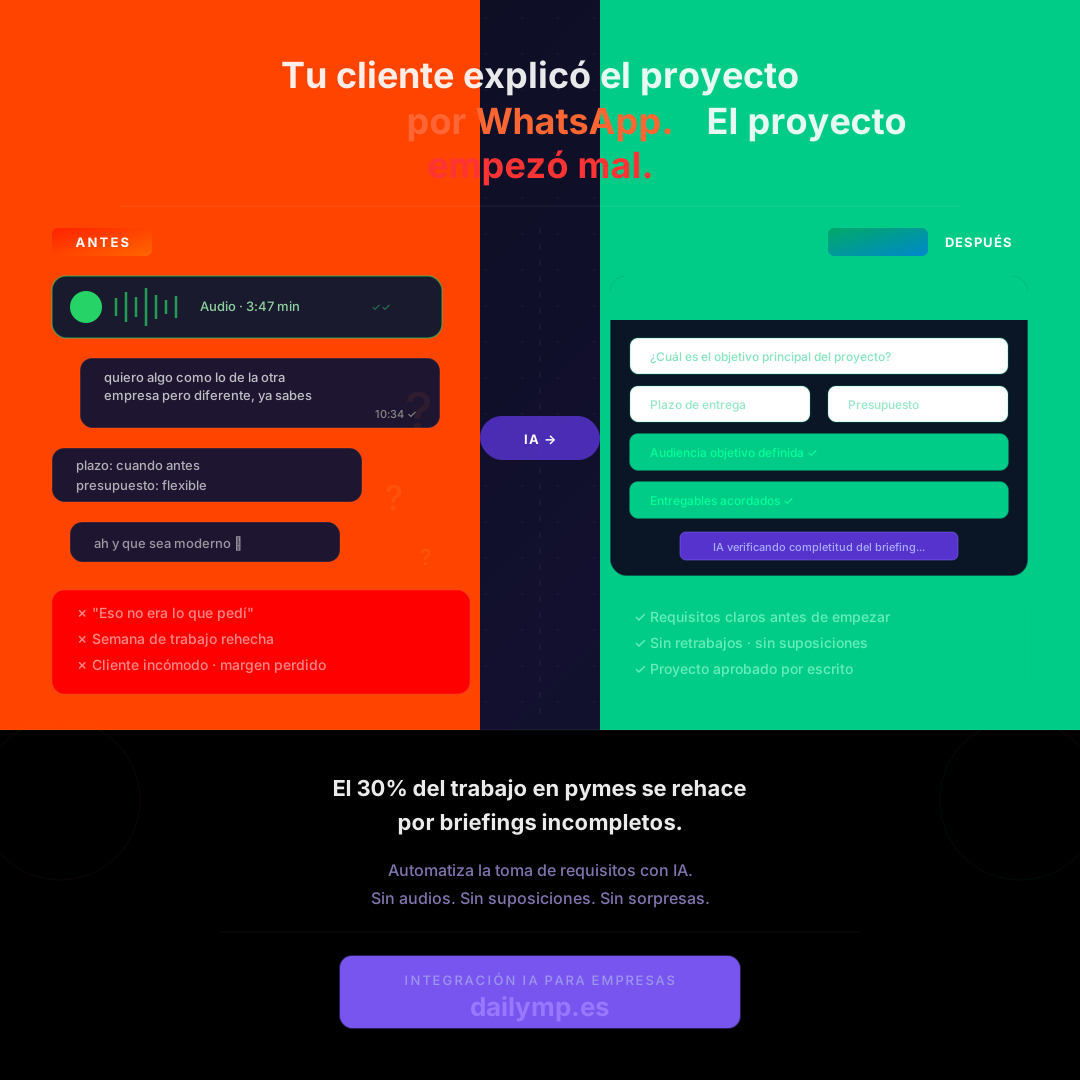
The Brief Came on WhatsApp. The Project Started Wrong.
Your client sent a 3-minute voice note. Then three text messages. Then an email with "what I mentioned before." Then called to add something they hadn't said.
Your team transcribed the audio, read the messages, tried to reconcile the versions and started the project. Based on what they understood.
Two weeks later: "This isn't what I asked for."
The most expensive problem nobody mentions in team meetings
When a project goes wrong, the conversation turns to deadlines, the team, or resources. Rarely does anyone say out loud what everyone knows: the problem started with the brief.
Not because the client is difficult. But because you don't have a system to capture what they're asking for.
The outcome is the same every time:
- Information scattered across four different channels (WhatsApp, email, call notes, Notion)
- Different versions of the requirements in each team member's head
- Undocumented assumptions that become work done the wrong way
- A week lost redoing what you thought was right
Quick calculation: if a typical project runs 30 hours and 25% gets redone due to misunderstandings, you're giving away 7.5 hours per project. Multiply by your monthly project count. That number is money you don't charge and time you don't get back.
Why clients never explain what they want clearly
Here's something important: clients don't know how to explain it clearly. Not negligence — they're just not experts at defining digital projects or automations.
Their job is knowing what they need. Yours is knowing what to ask.
When your briefing process is "send me whatever you want, however works for you," you're asking the client to do a job they don't know how to do. When they don't do it well, the project pays the price.
The problem isn't the client. It's that you don't have the system to guide them.
How an automated client intake system works
An AI intake agent does what a senior consultant would do in the first meeting: asks the right questions, in the right order, and doesn't move forward until it has the necessary information.
This isn't a Google Form. It's an intelligent conversation that:
- Receives the client with specific questions adapted to the project type
- Detects when an answer is vague and asks for clarification ("Does 'as soon as possible' mean this week or this month?")
- Validates that nothing important is undefined before closing the brief
- Generates a structured requirements document that everyone can see and approve
- Sends the client a confirmation with a summary of what was agreed
The result: before your team touches the project, a document exists with what will be done, why, for whom, in what timeframe, and with what success criteria. Signed off by the client.
When two weeks later someone says "this isn't what I asked for," you have the document. The conversation changes.
What changes in your business when you automate briefing
The impact goes beyond avoiding rework. It's deeper:
Your team starts with clarity. No clarification meetings three days into the project. No different versions of the brief in each person's head.
Small projects stop being a trap. Short engagements are where rework hurts most: if you spend 2 hours redoing something in an 8-hour project, you've lost 25% of your margin before you started.
Clients feel like you know what you're doing. Paradoxically, the more structured process builds more trust. A system that asks good questions signals "this person knows exactly what information they need to get it right."
Your business stops depending on who receives the brief. Today, if a salesperson takes the project, the brief looks one way. If an engineer takes it, it looks another. With a system, everyone asks the same questions.
What DAILYMP implements for your business
In AI Integration we work on exactly this type of solution: intake agents that connect to your current workflow (your website, WhatsApp Business, your CRM) and collect client information in a structured way before work begins.
You don't need to change your tools. The agent integrates with what you already use and delivers a complete brief in the format your team needs.
If you want to automate the full flow — from intake to internal project assignment — that's part of what we do in AI Agents & Automation.
The project that starts right, ends right
The brief isn't a formality. It's the difference between a project that flows and one that gets stuck at day ten.
If in your business projects usually start with half the information and end with uncomfortable conversations, this isn't a team problem. It's a missing system.
Tell me how your current process works and I'll explain what can be automated.