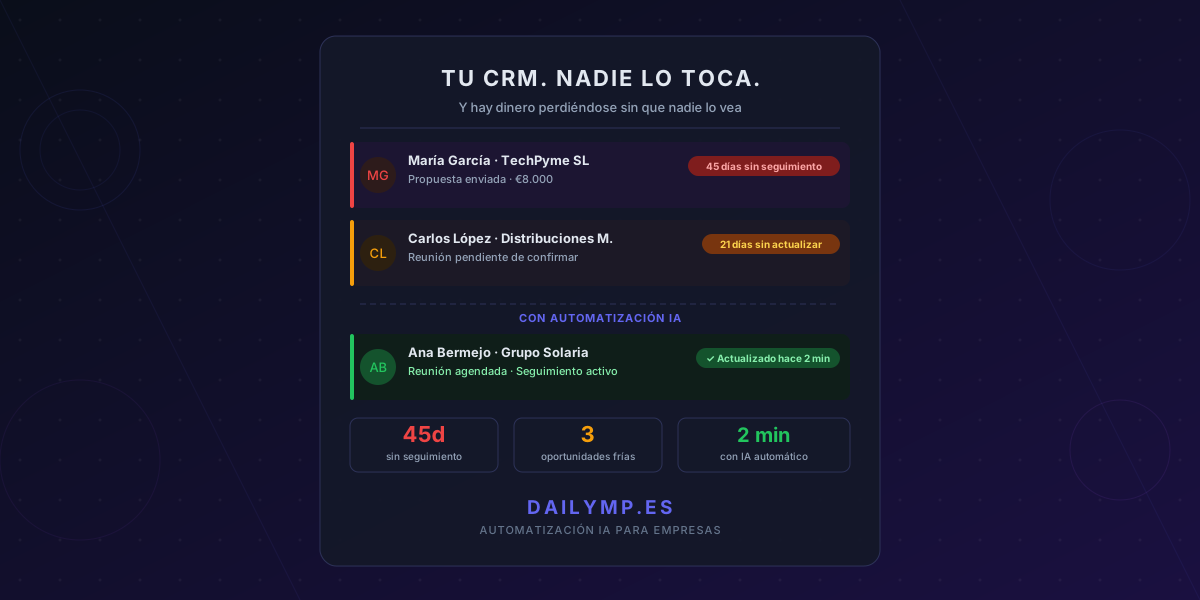
You Have a CRM. Nobody Updates It. You Know It.
You bought it last year. Or the year before. There was a demo, a two-hour training session, and real enthusiasm. This time would be different.
Eight months later, the last CRM entry is three weeks old. Your Monday sales meeting still runs on memory — every rep sharing what they "think is in the pipeline."
You're not alone. 65% of companies that invest in a CRM fail to get consistent usage from their team within six months. The reason isn't lack of discipline or a bad tool. It's that the CRM asks everyone to do everything twice.
The Real Problem: The Data Already Exists Somewhere Else
Everything your CRM needs is already in your business. It's in the email where you told the client you were sending the proposal. It's in the calendar event for Wednesday's call. It's in the invoice from last month. It's in the WhatsApp message where they confirmed it had been approved internally.
The problem is that someone has to copy it into the CRM. And that person always has something more urgent on their plate.
So the CRM falls behind. When it falls behind, it stops being useful. When it stops being useful, nobody uses it. When nobody uses it, it falls further behind. The loop closes on itself.
What This Costs You in Real Money
An outdated CRM isn't just an organisational problem. It's money you can't see leaving:
-
Warm prospects going cold without anyone noticing. You sent a proposal to a potential client 45 days ago. Nobody has followed up because nobody sees them in the pipeline. By the time someone remembers, they've already signed with a competitor.
-
Renewals that fall through. Your contract with that client expires in November. They're happy with you. But if nobody flags it in time, there's no renewal conversation, no proposal — and they end up comparing prices cold instead of renewing automatically.
-
Every handover starts from scratch. When a client calls and speaks to someone other than their usual contact, that person has no context. They dig through emails, ask a colleague, improvise. The client notices.
-
Business decisions made on gut feeling. How many new clients came in this quarter? Which ones generate the most revenue? What percentage of proposals close? If the answer is "roughly X, I think," there's a problem.
Why Teams Don't Update the CRM (And It's Not Laziness)
Here's the key point: the problem isn't the tool. Salesforce, HubSpot, Odoo — any CRM works if the data is there.
The problem is that updating the CRM requires a person to remember to do it after every client interaction, open the tool, find the right record, fill in the relevant fields, and get back to what they were doing. That's four or five extra steps after every email, meeting or call.
Multiplied by twenty active clients. Multiplied by five team members. The result is a task that's always "for later." This isn't a discipline problem — it's a process designed to fail.
What Changes When the CRM Updates Itself
DAILYMP's AI integration service connects your existing tools — email, calendar, Slack, WhatsApp Business — to your CRM and keeps everything current without anyone lifting a finger:
-
An agent reads your emails and automatically detects active commercial conversations. It updates the client status, logs the last contact date, and flags if there's a proposal in progress.
-
The calendar syncs meetings directly into the client record. No copying, no importing, no remembering.
-
Alerts fire when a client has been quiet for too long — not because someone manually reviewed it, but because the system spotted it on its own and notified the account manager.
-
The pipeline reflects reality in real time. When your sales director asks how the quarter is going, the answer is in the dashboard — not in each rep's memory.
The difference with AI automation agents isn't just saving time. It's that the decisions you were making blind are now made with actual data.
The Question Worth Asking Today
How long has it been since your team updated the CRM?
If the answer is "I'm not sure" or "they haven't," there's probably a missed sales opportunity waiting for someone to look. It may have been waiting for weeks. The prospect may have already moved on.
The CRM doesn't fail because it's a bad product. It fails because nobody has time to feed it. The fix isn't more training or more discipline — it's a system that updates itself.
Got a CRM that nobody touches and want it running without extra effort from your team?