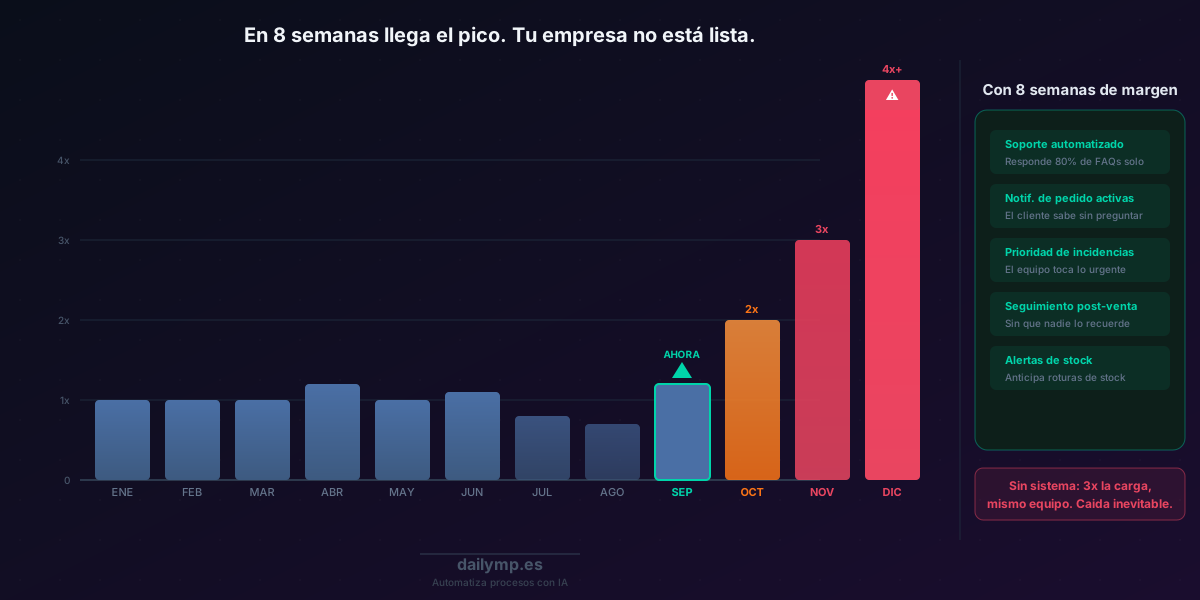
8 Weeks Until the Peak. Your Business Isn't Ready.
In October, the pressure starts to build. In November, the team is working longer hours. In December, everyone is at the limit and someone ends up apologising to a client for a delay.
And in January, everyone says "this year we'll prepare earlier." Same as last year.
The difference between a business that scales in Q4 and one that just survives it isn't team size. It's whether a system was prepared before the peak arrived.
What Happens When the Peak Hits Without a System
This isn't a willpower problem. It's a response capacity problem.
When demand triples in six weeks, every part of the business that was working "more or less" over the summer stops working. The friction points you tolerated because they weren't causing too many problems become bottlenecks.
Customer support collapses. Questions that got answered in a day now take three. Clients who don't get a response post on social media. Those posts create more work. The team spends 60% of its time putting out fires from 48 hours ago.
Orders are delayed and nobody knows it. Without an active notification system, clients don't know when their order arrives until they call to ask. When they call, someone has to stop what they're doing and search three different tools for the order status.
Quality drops. Not because the team is worse — but because they're working faster to keep their heads above water. Errors that would have been caught in July slip through in December because there are ten urgent things on top of them.
The team starts January burnt out. And begins the year without energy to make the changes they promised to make.
The Cost of Improvising Every Year
Some businesses hire seasonal staff for Q4. It's a reasonable solution if processes are well documented and the support team can get up to speed in days.
But in most SMEs, actually onboarding someone takes two to four weeks of real training. By the time temporary help works autonomously, it's the second week of December.
On top of that, the annual cycle of hiring, training and releasing temporary staff costs between €2,000 and €6,000 per person in invested time, labour costs, and organisational friction. Year after year. Without fixing the underlying problem.
The cost doesn't appear in any report. It's distributed across overtime hours, client errors, temporary hires and the wear on a team that knows every Q4 is going to be like this.
Why Businesses That Scale in Q4 Started Preparing in September
An AI agent for customer management and support doesn't get installed in three hours. It needs to connect to your systems, learn the context of your business, and adapt to your existing processes.
Implementation time in most businesses is two to four weeks. If you start in October when the peak is already arriving, you're too late.
The businesses that get through Q4 without collapsing are the ones that already have running in September:
- An automatic response system for the most frequent enquiries. Not a generic chatbot — an agent that knows your catalogue, your delivery timelines, and your actual terms.
- Active order notifications that inform clients of status without anyone having to look up that information by hand.
- A prioritisation system that distinguishes urgent incidents from ones that can wait, so the team focuses attention where it actually matters.
- Automated post-sale follow-up that captures the client's experience and catches problems before they escalate.
None of this requires hiring more people. It requires the tools you already use to be connected and configured to operate without manual intervention at the highest-volume touchpoints.
What Can Be Prepared in 8 Weeks
With eight weeks of runway — which is exactly how long there is from September to the real start of Q4 — here's what can be implemented:
Weeks 1–2: Map current friction points. Where does work pile up when demand increases? What questions does the team receive repeatedly? Which processes depend on a specific person to function?
Weeks 3–4: Connect the systems you already have. Online store, email, CRM or client manager, invoicing software. Make them talk to each other instead of forcing someone to copy information from one to another.
Weeks 5–6: Deploy the response and notification agents. Starting with highest impact: automatic support for the 10 most frequent questions, and order status notifications.
Weeks 7–8: Test the system under real load and adjust. Before the peak, not during it.
This Q4 could be the first one where the team reaches December without accumulated burnout. Or it could be the same as always.
September decides the difference.
If you want to know what can be automated in your business before the peak arrives, I can tell you exactly what would change in 30 minutes — working with the tools you already have.