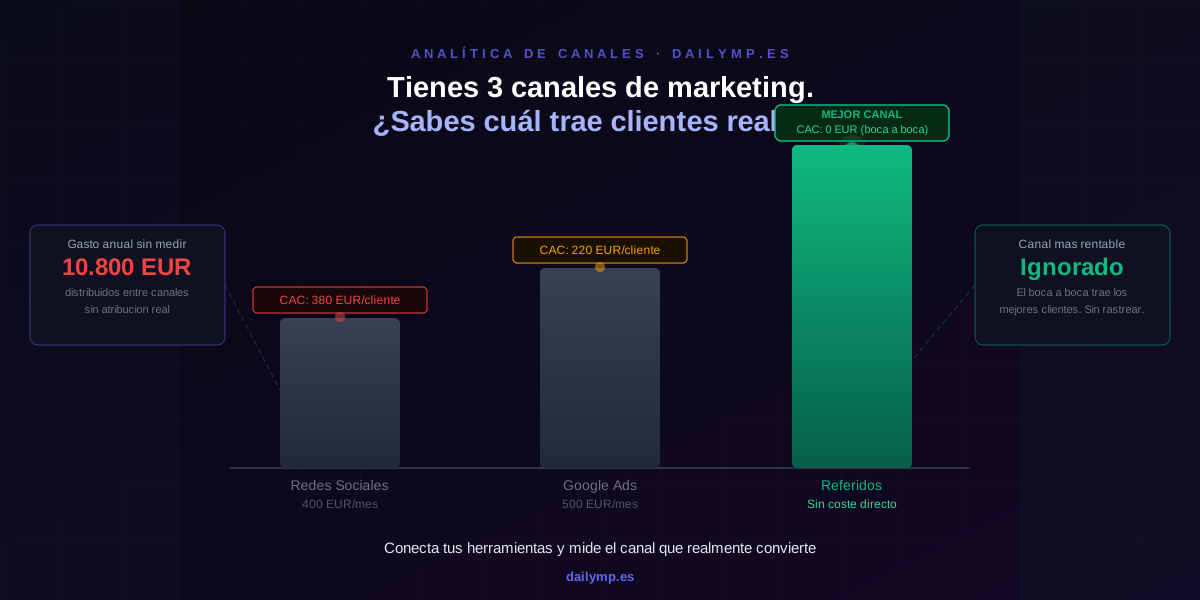
You Have 3 Marketing Channels. One Actually Works.
Q4 planning season is coming. Someone will ask: "What has worked in marketing this year?"
And in most small businesses, the answer is some version of: "LinkedIn gives us visibility… Google brings traffic… social media is going well…" None of that actually answers the question: which channel brought the clients who paid?
That sounds like a simple question. But in most companies with 5 to 50 people, the honest answer is: nobody knows for sure.
Three Channels, Three Invoices, No Useful Data
The typical setup: two to four active marketing channels running simultaneously. Each one sends a monthly invoice. Each one has its own dashboard full of metrics that sound positive.
Impressions up 18%. Engagement rate improved. Google clicks growing month over month. The social media agency sends a report with upward-sloping graphs.
What none of those reports tells you: of the six clients who signed this quarter, how many came from each channel?
That's the information you need to decide next year's budget. And it doesn't exist in any dashboard because nobody has connected the dots.
What You Know (and What You Don't)
You know exactly what you're spending. The invoices arrive like clockwork:
- Social media management: €400/month
- Google Ads: €500/month
- LinkedIn Ads: €300/month
- Total: over €14,000 per year
What you don't know:
- How many clients each channel actually brought in the last twelve months
- The average deal value of clients from each source
- The real cost of acquiring one client through each channel
- Which channel brings clients who come back and refer others vs. one-and-done projects
Without that data, you're allocating budget based on gut feel and what each platform says about itself. And every platform says it's working, because every platform measures its own performance with its own metrics.
The Free Channel That Always Gets Overlooked
Here's what typically happens when someone finally measures: the best channel was already there, it cost nothing, and nobody was nurturing it.
Referrals. Word of mouth. The client who arrived because someone said "work with them, they're good."
This channel typically brings:
- Higher-value clients (they arrive pre-convinced)
- Much better close rates (no cold selling required)
- Longer and more profitable relationships
- Zero acquisition cost
But because it has no invoice, there's no agency defending its ROI and no monthly dashboard reporting on it. Paid channels have entire teams justifying their existence. The referral channel runs on autopilot until it doesn't — and nobody builds a system to feed it.
The only way to know that word-of-mouth accounts for 40% of your annual revenue is to track the source of every client. Without that, those 40% are invisible.
Why Nobody Measures This
The data exists. It's in Google Analytics, your CRM (if you use it and it's actually up to date), and your ad platform dashboards.
The problem: it's scattered across four different systems that don't talk to each other. Connecting it into something useful — real cost-per-acquisition by channel — requires either spending two to three hours a month exporting data and building a spreadsheet, or having someone whose job is exactly that.
Most small businesses have neither the time nor the person. So they pick a third option: don't measure it, and renew the same channels next year because it "feels like it works."
With a marketing tool and CRM integration, the systems connect and attribution happens automatically. Every new client gets tagged with their origin — what they saw first, what was the last touchpoint before signing.
What Changes With Real Attribution
With systems connected, the report that used to take a morning to assemble runs itself. Every Monday you see:
- Clients closed this month: 5
- By channel: 2 from referrals, 2 from Google, 1 from social
- Revenue by channel: referrals €9,800 — Google €1,600 — social €500
- Cost per acquisition: referrals €0 — Google €250 — social €800
With those numbers in front of you, the Q4 budget decision makes itself. No marketing degree required to read it.
Beyond the report, automation agents can do specific things with that data: when a referral closes, automatically send a thank-you message to the client who recommended you; identify which client types generate the most referrals; alert you when a channel's cost-per-acquisition exceeds the threshold you set.
What Businesses Find When They Measure for the First Time
The most common outcome when implementing attribution in a small business:
One paid channel has a cost-per-acquisition three times higher than the others. It had been running for two years without being questioned because it "builds brand awareness."
The referral channel — active but untracked — was generating between 35% and 50% of annual revenue without anyone knowing the exact number.
With that data, the business reallocates €300–500/month from the worst-performing channel and builds a simple system to activate more recommendations from existing clients.
Time to implement attribution: under two weeks. Monthly maintenance time: zero. The system updates itself.
The Mistake That Repeats Every December
In December you'll sit down to plan the 2027 budget. The question will be the same: "What worked this year?"
If you don't have attribution in place before that meeting, the answer will still be the same: a feeling, an opinion, and renewing the same channels because changing feels risky without data.
Q4 is the best time to implement this — not to get perfect data on 2026, but so that by December 2027 you have twelve full months of real attribution to work with.
Want to know which of your channels is actually bringing your best-paying clients?
Message me and in 30 minutes I'll tell you what needs connecting →