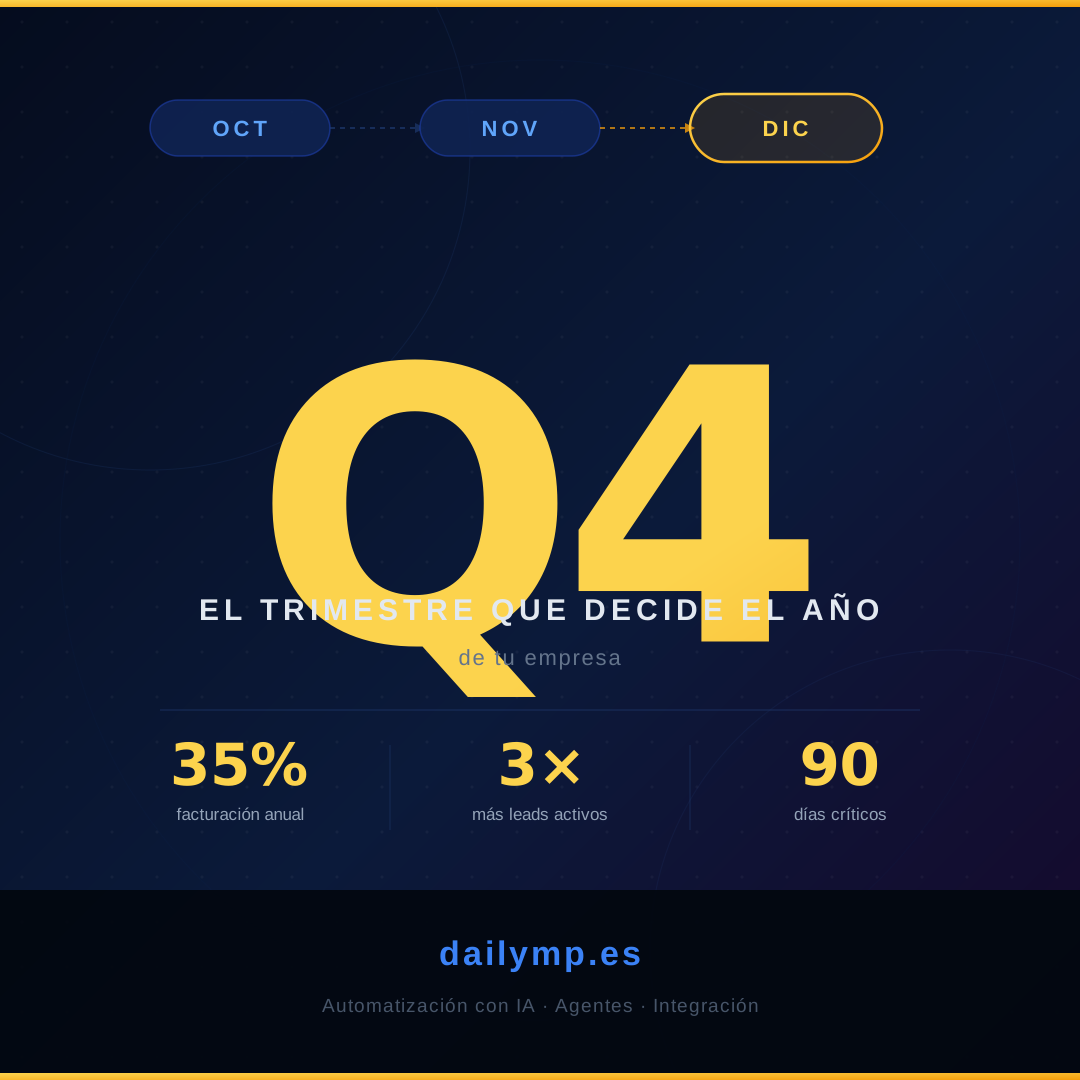
Q4 Starts Monday: Is Your Business Ready?
October 1st is five days away.
For most small and medium businesses, that means one thing: the next three months are the most intense of the year. Clients rushing to close projects before December. Corporate budgets that must be spent before the 31st. Year-end billing piles. Staff with their minds already on Christmas holidays.
Q4 is the quarter that decides whether the year was good. And most businesses face it with exactly the same manual processes they had in January.
More Demand, Same System: the Q4 Trap
October arrives with a surge you didn't quite see coming. Clients who spent months saying "we'll look at this in autumn" suddenly want to start now. Companies with annual budgets need to spend them before December 31st or lose them. Projects that got pushed back in August and September now have real urgency.
And in that moment of peak demand, your business is trying to respond with the same processes it had in March, when things were quieter.
The result is predictable: response times go up. Proposals go out slower. Follow-ups get missed. Some opportunities close with a competitor.
Not because your service is worse. Because the volume outpaced the processes.
The Revenue That Disappears Between October and December
Q4 typically represents 30 to 40 percent of annual revenue for a service business. It is the period when the most money moves.
If during those three months your business loses 20% of incoming opportunities — through slow responses, missed follow-ups, or coordination errors — you're leaving between 6 and 8 percent of your annual revenue on the table.
For a business billing £150,000 a year, that's between £9,000 and £12,000 that never arrives. Invisible. No accounting entry. Never appearing in any report.
The most common ways businesses lose money in Q4:
- Proposals without follow-up: you sent a quote in September, the client has it, but nobody has called. In October that client needs to decide. If you don't call first, they call someone else.
- Delayed invoicing: December arrives and there are services from October and November still not billed because nobody had time. You collect in January what you should have collected in November.
- Leads without fast responses: in Q4 people have less patience. If someone reaches out and doesn't hear back within hours, they look elsewhere. Your competition is also in Q4 mode.
- December absences with no coverage: part of the team will be on holiday or running at half capacity. Demand doesn't drop. Capacity does. Without systems to cover those absences, service suffers exactly when it matters most.
- Clients with end-of-year budgets to spend: some companies in November have unspent budget lines that expire December 31st. If you're not on their radar at that moment, that money goes to another supplier.
How Businesses That Close the Year Well Actually Work
The difference isn't working longer hours in October. It's having systems that keep running even when people aren't at 100%.
The AI automation agents we build at DAILYMP solve exactly these Q4 bottlenecks:
Automatic proposal follow-up: any open quote that goes seven days without a response triggers an automatic contact. Personalised, with the client's name and the specific project, at the right moment. Without anyone having to remember.
Invoicing without manual intervention: delivered services automatically generate the correct document and send it to the client. Billing doesn't depend on someone finding a gap in their December calendar.
Immediate response to new leads: a client who writes at 7pm on a Thursday in November gets an instant acknowledgement and a call scheduled for the next day. Without anyone checking email at that moment.
Reactivation of dormant clients: October is the perfect moment to contact clients who have been quiet for more than ninety days. They have budget. They need reliable suppliers. If you reach them before the competition, you have a real advantage.
With a proper integration of the tools you already have, these processes run throughout the quarter regardless of team sick days, bank holidays, or staggered December holidays.
Three Things You Can Review This Week
You don't need to build everything before October. But there are three things you can do right now:
-
Check which proposals sent since July haven't had a response. If there are more than five, your business has an active opportunity leak right now.
-
See how many clients have gone ninety-plus days without you proactively reaching out. In Q4, those clients have budget to spend. If you don't call them, someone else will.
-
Calculate how long it takes your business to issue an invoice after delivering a service. If the answer is more than one week, money is arriving late and hurting your cash flow.
The answers will tell you exactly where the real leaks are. And those leaks, in the most important quarter of the year, have a very concrete cost.
If you want to know how to fix this in a business your size, tell me over WhatsApp. In thirty minutes I'll tell you what can be automated before November arrives.