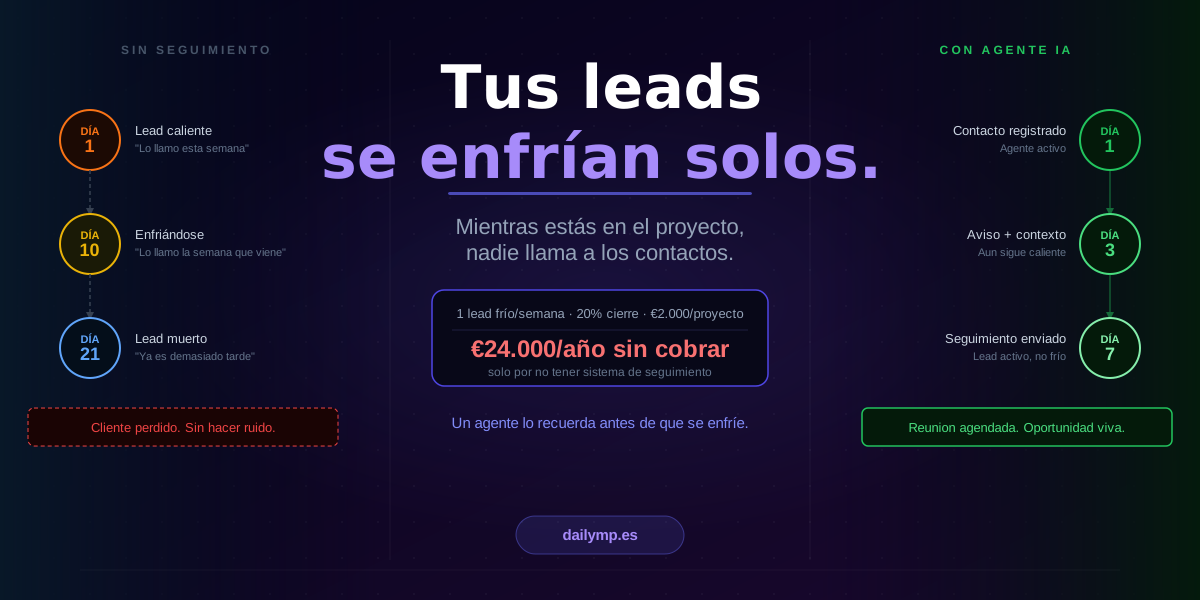
Every Week You Let a Closable Lead Go Cold
Last week you were in a meeting. Someone mentioned they needed help with something you do. You said "let's talk." They gave you their number. You saved it in your phone.
Nine days have passed.
You haven't called. Not because you don't want the work. But every time you've had a free moment, three urgent things were waiting. That name in your contacts made no noise. No alarm, no reminder, nobody asking "hey, what happened with that contact from Tuesday?"
That's how most business that never gets closed is lost. No drama. No angry client. Just nobody following up in time.
The Lead That Goes Cold Without a Sound
There's a big difference between losing a client because you did bad work and losing a prospect because nobody called them.
The first is painful but visible. The second is invisible — you don't know what you lost because it never made it to a client list. Just a name and number in your phone that cooled down a little more each day.
Most leads don't go cold all at once. They fade:
- Day 1: you're thinking about calling them.
- Day 5: you still plan to, but you leave it for tomorrow.
- Day 12: it already feels weird to call without fresh context.
- Day 21: it doesn't make sense anymore. Too much has happened.
And the most uncomfortable part is you don't see it coming. While all of this is happening, you're doing your job: delivering projects, serving current clients, putting out fires. The cold lead doesn't compete with anything urgent. It just disappears.
What This Costs Your Business (That You Never Actually Calculate)
Put a concrete number on it. Imagine one new contact enters your radar every week — someone who could become a client. Not all of them are hot, but on average one in five turns into a project.
If that contact goes cold because no one followed up, you lose a potential client. If your average project is £2,000 and you close 20% of contacts, each cold lead is worth £400 in expected revenue.
Four cold leads a month is £1,600. In a year, nearly £20,000 in business that never materialized.
Not because the leads were bad. Not because your service wasn't worth it. But because between "interesting, let's talk" and a signed agreement, nobody kept the conversation warm.
Why Manual Follow-Up Always Fails
The honest answer is that manual follow-up competes against everything else you have to do — and it always loses.
Your brain isn't a follow-up calendar. You can hold five pending contacts in your head. Not twenty, with context, at different stages of their cycle.
Urgent always wins. You have a client waiting on a deliverable. You have a meeting in an hour. Last week's lead can wait. Until it can't.
The "perfect moment" to call never arrives. There's always a reason to wait: "better when I have the proposal ready," "better after this delivery," "better on Monday." Monday comes and there's another reason to wait.
CRMs don't update themselves. You have Notion, HubSpot, some spreadsheet. But someone has to feed them. That someone is you, with everything else on top.
The result is that your real pipeline — the contacts who could become clients — doesn't exist anywhere as an active, living thing. It lives in your head, fragmented, without dates, without context.
What an Automated Follow-Up Agent Does
An AI agent connected to your existing tools doesn't replace the sales conversation. It does something more basic and more valuable: it makes sure that conversation actually happens.
Here's how it works in practice:
When you register a new contact — via WhatsApp, email, or a voice note — the agent captures it with context: who they are, how you met them, what they need, when the last interaction happened.
Three days later, if you've made no move, you get a reminder with that context summarised. Not just "remember to call X." But: "Sarah Collins, interior designer in Manchester, met at Tuesday's event. Mentioned needing help automating her quotation process. Last contact: 3 days ago."
By day seven with no response, the agent can draft a personalised follow-up message ready to send — or send it automatically if that's how you've configured it.
By day fourteen, the contact moves to a "priority attention" list so you make an active decision: close the lead or make one last attempt.
None of this requires you to change how you work or learn a new CRM. The agent runs on the tools you already use.
The Result That Surprises People Most
Businesses that automate lead follow-up don't close more deals because they're better salespeople. They close more because they stop losing what they already have.
The most common shift I hear: "I found leads from two months ago that hadn't gone cold — nobody had just called them." Contacts who still had the problem unsolved, still looking for someone, and were glad to hear from you.
Your close rate doesn't change. What changes is the number of conversations that reach their natural conclusion instead of disappearing in silence.
And there's a side effect nobody anticipates: the vague anxiety of "I know I'm losing business but I can't see how much" disappears. When there's a system managing it, the pipeline stops being that unknown territory that causes background stress and becomes something concrete and actionable.
If you want to see how this would work in your business — what data to capture, which tools to connect, what timelines make sense for your type of work — I can give you a concrete map in 30 minutes.
Start with the automation services for SMEs or go straight here:
I want to stop losing leads without realising it →
You don't need to change how you sell. You just need someone to make sure the sale doesn't go cold before it starts.