Nobody in Your Company Knows If Clients Are Happy
The client signed in September. The project went well. No issues. At the closing meeting they said they were happy and would probably come back.
They never came back. They never complained either. They simply called someone else for their next project.
What went wrong? You don't know. Because no one asked.
The Client Who Doesn't Complain — But Doesn't Come Back Either
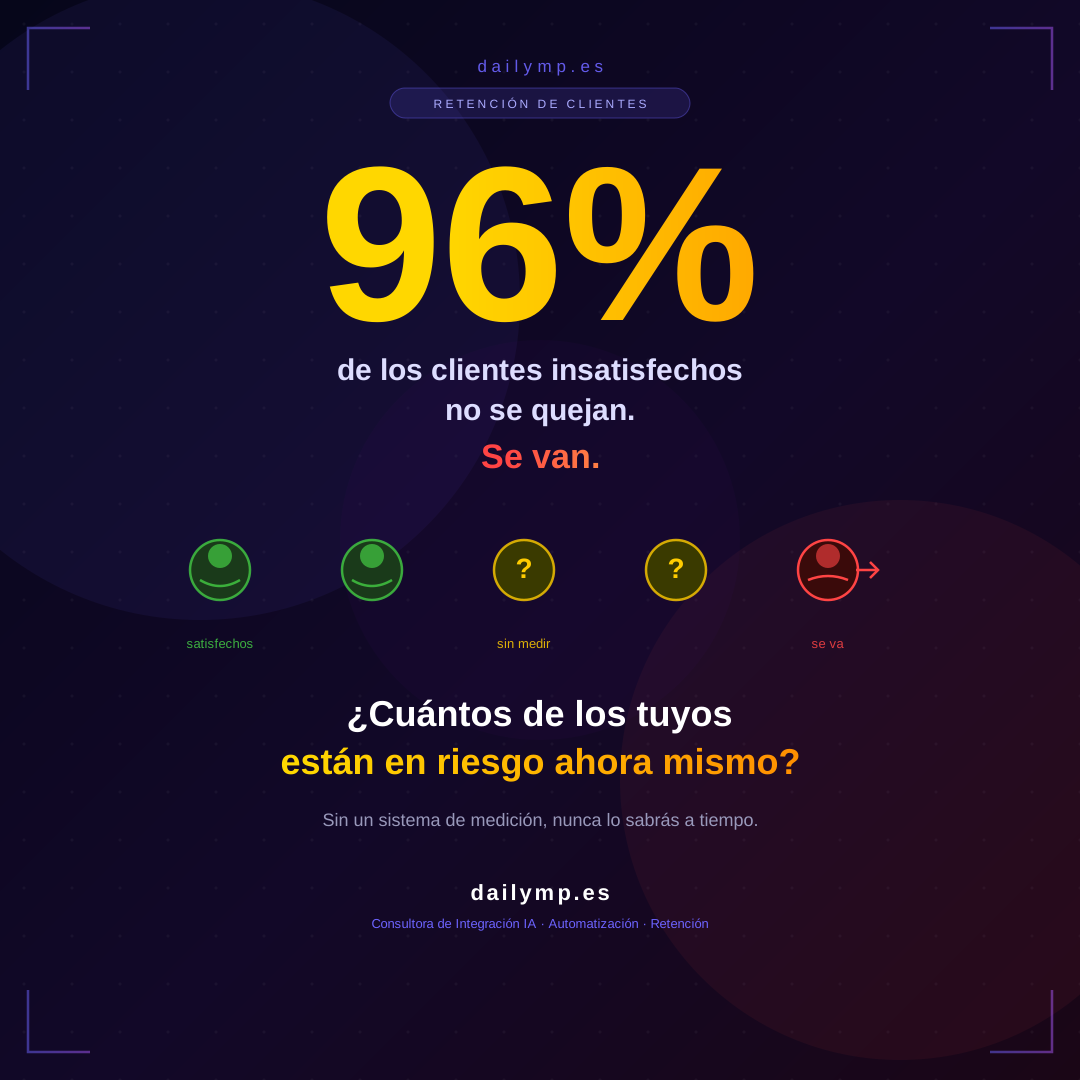
There's a statistic that changes how you think about client management: 96% of unhappy clients never complain directly. They just leave. And many of them share their experience with two to four people before they do.
It's not that they don't want to tell you what went wrong. It's that complaining takes effort, and most people would rather not have that conversation if they can avoid it. It's easier to just not come back.
The result in your business is a silent outflow. Clients who stop buying, stop responding, stop recommending — without any alarm going off. Without anyone detecting something went wrong until that name disappears from the pipeline.
And when you ask why they left, it's already too late to do anything about it. The relationship ended before you had a chance to fix it.
What You Don't Know About Your Active Clients Right Now
Quick exercise. Think about your ten most important active clients. Now answer these questions:
How many of them are fully satisfied with what they receive?
How many are waiting for someone to ask about something that bothered them — something they never mentioned?
How many are quietly exploring alternatives because something isn't working as expected, and they assume "that's just how this works"?
If the honest answer is "I don't know," that's exactly the problem.
Most companies manage client satisfaction reactively: if there's a formal complaint, they handle it. If there's silence, they interpret it as satisfaction. But silence isn't satisfaction. Silence is neutrality. And neutrality, without active intervention, tends toward exit.
What Not Knowing Costs You
Let's put concrete numbers on this.
Imagine you have twenty recurring clients. If the average percentage of silently dissatisfied clients in service businesses is 20-30%, that means four to six of your current clients have an experience below their expectations. And none of them have told you.
Calculate the annual value of those clients. If each bills an average of €3,000 per year, you're talking about €12,000–€18,000 at real risk. Not in hypothetical future sales — in clients who might be leaving this very week.
But there's a second cost nobody calculates: satisfied clients who never refer anyone because nobody asked. A happy client who isn't prompted to refer is a missed opportunity every single month. Without a system that detects and acts at the right moment, that potential never activates.
Why the December Survey Doesn't Work
Many companies try to solve this with an annual survey. A form that arrives in December, has eight questions, and takes twelve minutes to fill out.
The problem is that it arrives too late. If a client has had a bad experience for four months, the damage is done. They may have already decided not to renew. They may already be in conversations with another provider. The December survey documents the failure — it doesn't prevent it.
What works isn't asking for feedback once a year. It's detecting satisfaction signals continuously, at the right moments: when a project ends, when an issue is resolved, when there's been a month without active interaction.
This isn't about constantly bothering the client with questions. It's about one single question, at the right moment, with a system that acts based on the answer.
How It Works When There's a System Behind It
A client completes the most important milestone of their project with you. Instead of waiting for something to fail or for year-end, the system sends a simple question: how did it go?
If the response is positive, the system detects an opportunity: it activates a reminder for someone on the team to propose the next step, ask for a referral, or simply reinforce the relationship at that peak satisfaction moment.
If the response shows any friction — something that didn't go quite as expected — the system alerts the client owner before that friction becomes a decision not to renew. Not to defend ourselves. To listen and take action before it's too late.
That's what we build at DAILYMP with automation agents for businesses: automated flows that keep the client relationship active, detect dissatisfaction signals in real time, and open conversations when they have the most value.
And we do it by connecting those flows to the tools your company already uses — your CRM, email, WhatsApp, whatever it is — with custom AI integration that doesn't require changing how your team works.
Real Results
Companies that implement an active satisfaction system achieve three concrete results:
They reduce silent churn by 40 to 60% in the first year. Not because problems disappear, but because they're detected before they become cancellations.
Active referrals increase by 30-50%. Satisfied clients, when asked for a referral at the right moment, give one. The difference is that someone has to ask them — and at the right time.
Problem resolution time drops because issues are detected earlier. A problem identified at ten days costs hours to manage. The same problem identified at ninety days can cost you a client.
One Question for Today
When was the last time someone at your company asked one of your current clients how everything is going?
Not in the context of an active project. Not to sell them something. Simply: are you happy with how we work together? Is there anything we could improve?
If the answer is "months ago" or "we never do it systematically," that's the most valuable piece of information in this article.