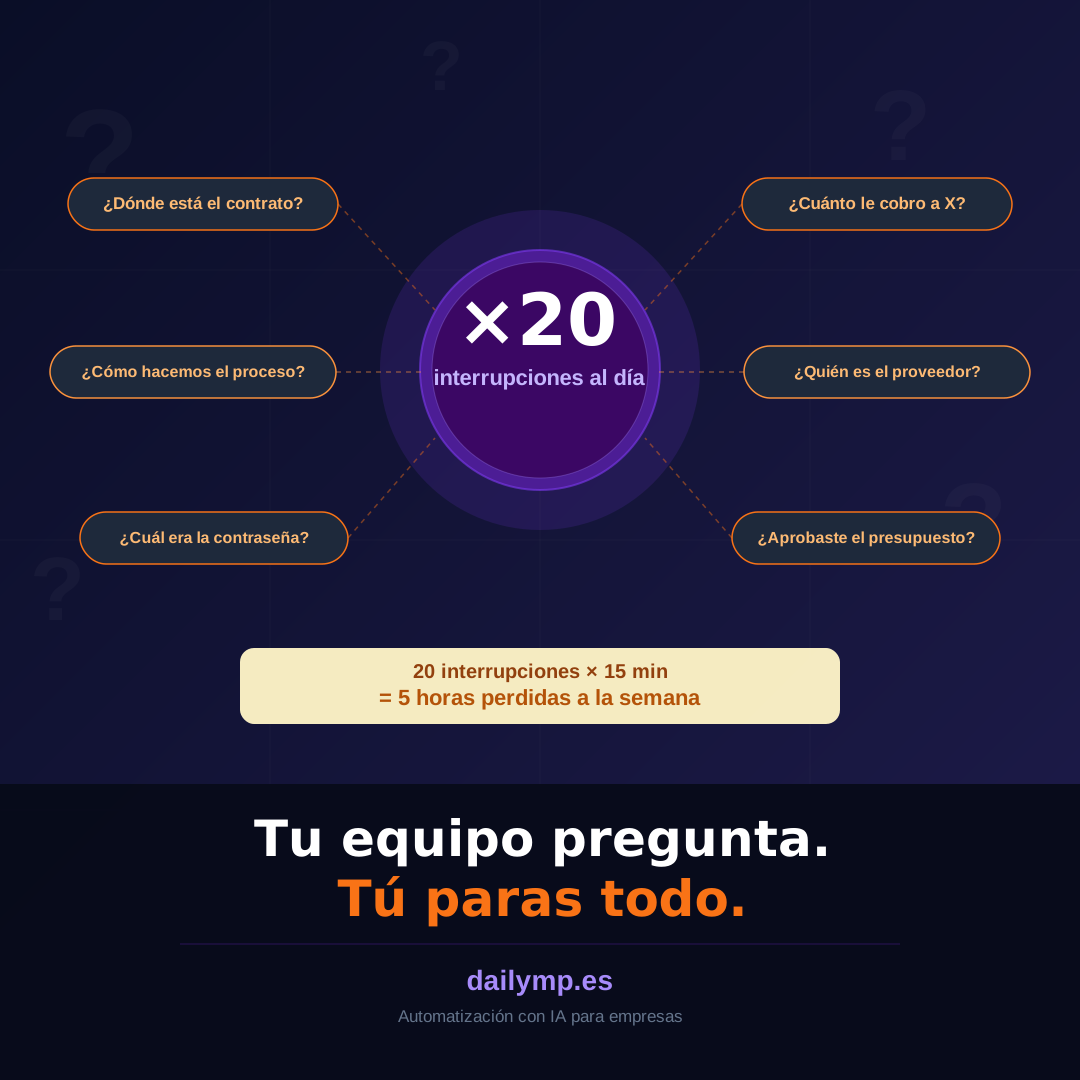
Every Team Question Costs You 15 Minutes
It's 11 in the morning. You've been focused for forty minutes on something that needs real concentration — a big proposal, a strategic plan, a client offer you've been putting off for a week.
Your phone buzzes. It's Sarah from your team: "How do we apply the loyalty discount for the Madrid client? I can't find the process."
You stop. You look it up. You explain. You go back to work. It takes ten minutes to get your train of thought back.
At 11:30, a message from Tom: "What's the price for X on the contract we need to renew?"
You stop again.
By lunchtime, you've had eight interruptions like that. Three hours gone, and nothing you planned to do is done.
The real cost nobody measures
There's something most small business owners know but rarely calculate: an interruption from your team doesn't cost 2 minutes. It costs 15.
The data comes from Microsoft, replicated in several studies: after an interruption, the brain needs between 10 and 23 minutes to return to its previous level of concentration. A "quick question" doesn't exist.
Do the maths for your business:
- 15–20 interruptions per day (messages, WhatsApp, internal calls)
- 15 minutes of real cost per interruption
- 5 days a week
Result: between 18 and 25 hours lost every week. Not in low-value work — in interruptions for questions that, if they had an accessible answer, nobody would bother asking you.
The questions are always the same
What stands out when you start analysing your team's interruptions is that 80% are always the same. The client changes, the number changes, but the question has been repeating itself for months:
- Where is the contract template saved?
- What do we charge this type of client?
- What's the process for handling a return?
- Who do we call when supplier X fails?
- Did you already approve last week's quote?
- How do I access the old invoicing system?
These questions have answers. You carry them in your head, or they're somewhere in a document nobody can find, or in an email from eight months ago.
The problem isn't that your team is disorganised. The problem is that the information in your business has nowhere to live except your head.
Why wikis and manuals don't fix this
The obvious solution is to document everything. Build an internal wiki. Write a process manual. Organise a Google Drive folder properly.
Have you tried this already? How long did it last before going out of date?
Static documents don't work because nobody looks them up when they have an urgent question. The natural way to ask is the direct message — WhatsApp, Slack, whatever chat you use. Searching through a folder requires knowing what to search for and having the time to do it.
Your team doesn't have that time. That's why they message you.
What changes when an agent answers instead of you
What actually works is an AI agent connected to your real business information. Not a static FAQ. A system that understands questions in plain language and responds with the correct information instantly.
Your team types in WhatsApp or Slack: "What's the price for a type B client with the loyalty discount?" The agent checks the updated pricing, applies the right conditions, and replies in seconds. Without interrupting you.
Your team doesn't have to change how they work. They keep asking the same way they always have. The difference is that you no longer have to be the one who answers.
At DAILYMP we build this kind of internal AI agent connected to your actual business systems — pricing, CRM, process documents, contracts. Not FAQ pages you maintain by hand: direct connections to updated data sources.
What you get back when the agent answers for you
The most immediate result isn't technological. It's real time.
Your team gains independence. When they know they can get an answer instantly — without waiting for you to be available — they work more fluidly. Small decisions don't wait on you.
You gain focus. Two or three hours a day without interruptions for questions that already have a fixed answer makes a measurable difference in what you can move forward each week.
The business gains consistency. The answer is always the same, regardless of who asks or when. No different versions depending on who picks up the phone that day.
If you'd like to see how this works in practice, here are some real examples from businesses already working this way.
How many hours are you giving away each week?
This isn't rhetorical. It's a calculation worth doing before deciding whether this makes sense for your business.
If your team interrupts you 15 times a day with questions that could answer themselves, you're losing between 15 and 20 hours a week. Not in low-quality work — in avoidable interruptions.
An AI agent that answers those questions isn't a complex technology project. It's a decision about what you do with that time.
If you want to talk about how this could work in your business, message me on WhatsApp. In 30 minutes I can tell you what makes sense for your specific case.