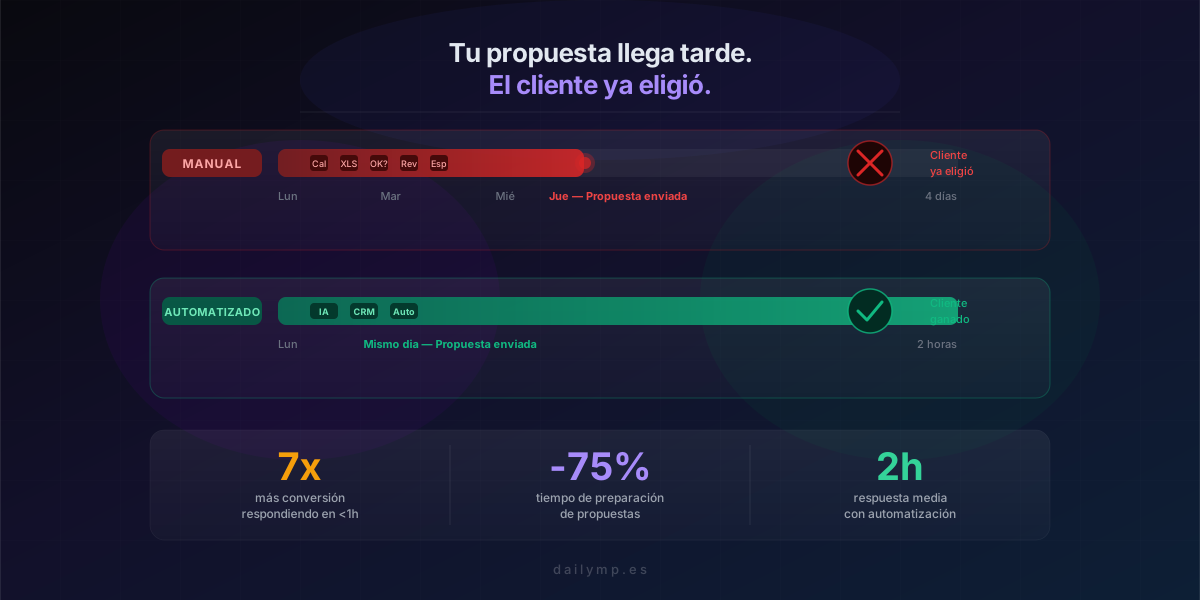
Your Quote Takes 3 Days. Theirs Takes 3 Hours.
The client emailed you on Monday. "Could you send me a quote for what we discussed?"
Great. A real opportunity. This one's going to close.
So you start pulling it together: hunting for updated pricing in a spreadsheet nobody has touched in weeks, calling a supplier to confirm availability, trying to remember what you agreed with this client last time, opening the old Word document and adapting it...
Tuesday you've got a morning meeting and three fires to put out in the afternoon.
Wednesday you pick it back up, realise there's one number you're not sure about, send a message to your partner to double-check.
Thursday you finally send it. The proposal looks great.
Friday the client replies: "Thanks, but we've already sorted it with someone else."
You didn't lose that sale because of price. You didn't lose it because of quality. You lost it because you arrived four days late to a decision your competitor had resolved in four hours.
Why a Simple Quote Can Take You Days
It's not that you're slow. The process is broken.
When you put together a proposal by hand, you're gathering information from different places: client history in one spreadsheet, pricing in another file, availability in a system that doesn't connect to anything, agreed terms in an email from two months ago that takes 15 minutes to find.
Then comes the formatting: opening the previous document, adapting it, removing the old client's name, updating the dates, making sure the numbers add up.
And if it needs internal sign-off before going out, add another day or two.
Each proposal costs you between two hours and two days depending on complexity. Not because the work is hard — but because the information is scattered and the process is manual.
What's Happening on the Client's Side
What many SME owners don't see is what's happening on the client's end while you're preparing.
Your client asked three or four companies for quotes. You're not the only one. Whoever responds within hours gets the meeting. Whoever takes days arrives when the decision is almost already made.
The data is clear: responding to an enquiry within an hour increases the chance of closing the sale by 7x compared to responding in 24 hours. By day three or four, that probability drops to near zero.
The lead doesn't wait. They carry on with their day, talk to others, get more options. And when your proposal finally arrives — however well crafted — they're already mentally somewhere else.
The Real Cost Nobody Calculates
Grab a piece of paper and do this exercise:
How many quotes or proposals do you send per month? Let's say 10.
How many close? If you respond within 24 hours, probably 4 or 5. If it takes you an average of 3 days, maybe 1 or 2.
What's the average value of each client you win?
The difference between the fast scenario and the slow scenario, multiplied by 12 months, is what your manual proposal process is costing you. It's not an admin cost — it's revenue that never comes in.
And on top of that, putting together those proposals takes time you could be spending on existing clients, improving your service, or simply switching off.
What Changes When the Process Runs Itself
When we build commercial automation for a business, the first thing we look at is exactly this: how long does it take from an enquiry coming in to a proposal going out?
Automation doesn't mean a machine does your creative thinking. It means the boring part — gathering data, calculating, formatting, sending — happens automatically.
A well-configured agent can:
- Pull the client's details from your CRM or contact form
- Check live availability and up-to-date pricing in real time
- Generate a draft proposal tailored to that client's specific conditions
- Send it to you for a quick 10-minute review
- Dispatch the proposal and automatically log the follow-up
Response time drops from days to hours. Or minutes, if the process allows it.
You don't need a technical team or to overhaul everything you have. If you already have a process — even a manual one — it can be automated with AI integration without starting from scratch.
Real Results
Businesses that automate their proposal process consistently report:
- 70–80% reduction in preparation time
- Higher close rates by arriving before the competition
- Fewer errors in documents — outdated pricing, wrong client details
- The commercial team spending their time selling, not formatting documents
The client who writes to you today wants a response today. Not tomorrow. Not "soon". Today.
The Question Worth Asking
How many proposals have you sent in the last three months that didn't close? How many of those arrived late?
If you don't know, start there. Measure how long it takes from the moment an enquiry comes in to the moment the proposal goes out. With just that one number, you can calculate what this is costing you.
If you want to take the next step and automate the process, tell me how it currently works in your business.