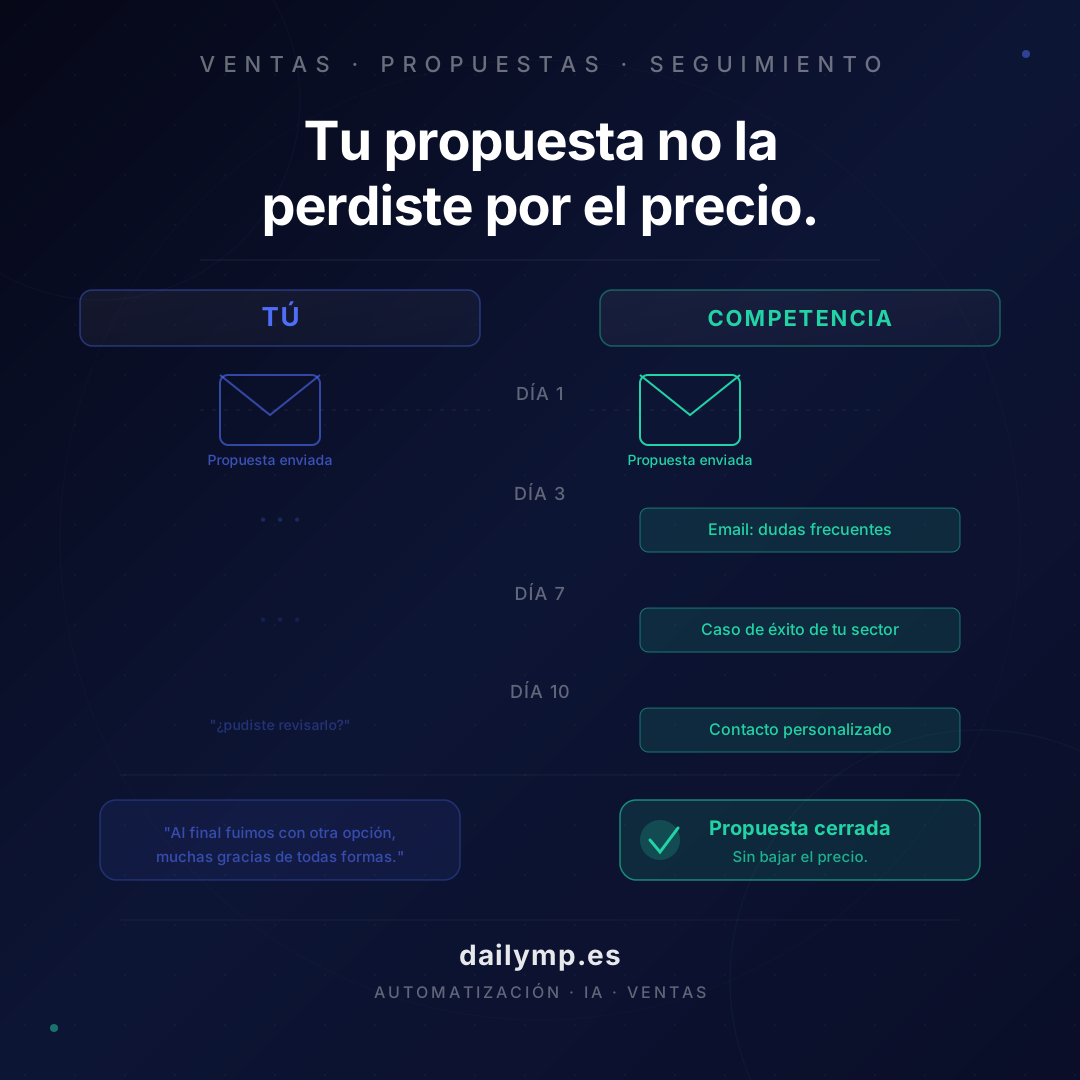
You Didn't Lose That Deal on Price
Three weeks ago you sent a proposal to that client who looked like a perfect fit.
Silence.
Ten days later you wrote: "Just wanted to check if you had a chance to review our proposal." Reply: "Yes, we're still evaluating."
More silence. Then: "We ended up going with another option — thanks anyway."
It wasn't the price. You probably didn't even ask why. The conversation ended with a polite emoji and that was it.
What you never knew is what happened inside that client's head during those three weeks.
What's Actually Happening While They "Evaluate"
The client receives your proposal. They genuinely intend to compare carefully and decide well. But then, life happens.
An urgent problem comes up Thursday. A meeting runs long Friday. The decision-maker is traveling Monday. By Tuesday, your proposal is the fourth item on a list of things they'll "get to."
They haven't forgotten you. But they're not thinking about you.
Meanwhile, one of your competitors — the one with a slightly more organized process — has sent two things without asking for anything: first, an email answering the questions clients typically have before deciding. Then, a short case study from a company in the same industry.
No pressure. No "so what did you decide?"
Your name didn't appear. Theirs appeared twice.
Who do you think won the deal?
The Decision Is Made Before They Tell You
The most common mistake in SMB sales: assuming the decision happens when the client says yes or no.
The real decision happens earlier. At a specific moment when the client mentally compares their options and chooses one. That moment doesn't have to involve any conversation with you.
If you're not in their head at that moment, you don't win.
Not being in their head doesn't mean they don't know you. It means that since you sent the proposal, you haven't given them anything of value. Not a concrete example of how you solved a similar problem. Not an answer to the question they had but didn't ask. Not a message that said "thinking about your situation, here's something that might help you decide."
The business that doesn't follow up between sending and decision is invisible at the moment that matters most.
What That Silence Actually Costs
Let's use real numbers.
If you send ten proposals a month at an average value of €3,000 and you currently close 20% — two deals — a 10% improvement means €3,000 more per month. No new clients. No more proposals. No price reductions.
A 10% improvement in close rate isn't a stretch when the only difference between you and the one who closes is being present with something useful when the client needs it.
Most businesses that run these numbers for the first time are surprised. Not because they're doing something terribly wrong. But because they've been leaving money on the table believing they were already doing "everything possible."
What Good Follow-Up Looks Like (And What It Doesn't)
Follow-up that doesn't work: "Hi, just checking in to see if you had a chance to review the proposal."
That adds nothing for the client. It's work for them — having to respond — with nothing in return. Even if you don't feel like you're pressuring them, they do.
Follow-up that works:
- The answer to the question they didn't ask but definitely have: "How long does implementation take?", "What happens if something goes wrong?", "Have you worked in our industry?"
- A concrete case from a client who had a similar problem — and what result they got
- A clarification about something in the proposal that might raise doubt, without waiting for them to ask
That kind of outreach doesn't feel like a sales push. It feels like the company that sent the proposal genuinely understands what the client needs to make a confident decision.
The difference between the follow-up that annoys and the one that helps is simple: does it give something, or does it only ask for something?
Why Nobody Does It Even Though Everyone Knows It Works
Because it requires remembering. It requires knowing where each open proposal stands. It requires crafting something different for each client based on their situation, their industry, and their specific doubts.
And when you have ten open proposals simultaneously, active projects, and the daily grind on top of everything — it just doesn't happen.
Not because you don't want it to. But because relying on someone remembering isn't a system. It's a wish.
The answer isn't to hire another salesperson. It's to automate the follow-up.
With an automation agent connected to your sales process, every proposal you send triggers an automatic sequence:
- Day 3: a message with the most common pre-decision questions, adapted to the client type
- Day 7: a short case from someone with a similar problem and how it was resolved
- Day 10: an internal notification to make a personalized contact if there's still no response
No one has to remember. No one has to write the message. The follow-up happens automatically, at the right moment, with the right content.
To understand how this fits into the full picture, see how AI integration works across your business processes.
What Changes When Follow-Up Runs on Its Own
You close more without lowering prices. Without more proposals. Without more meetings.
And you stop living with the anxiety of silence. You know every sent proposal is being actively supported. That the client is receiving value without having to ask for it. And when the moment to decide comes, your name resonates the loudest.
The salesperson who's always there at exactly the right moment with something useful — never pushy, never pressuring — is a well-configured automation.
How many open proposals do you have right now that you're not actively supporting?